
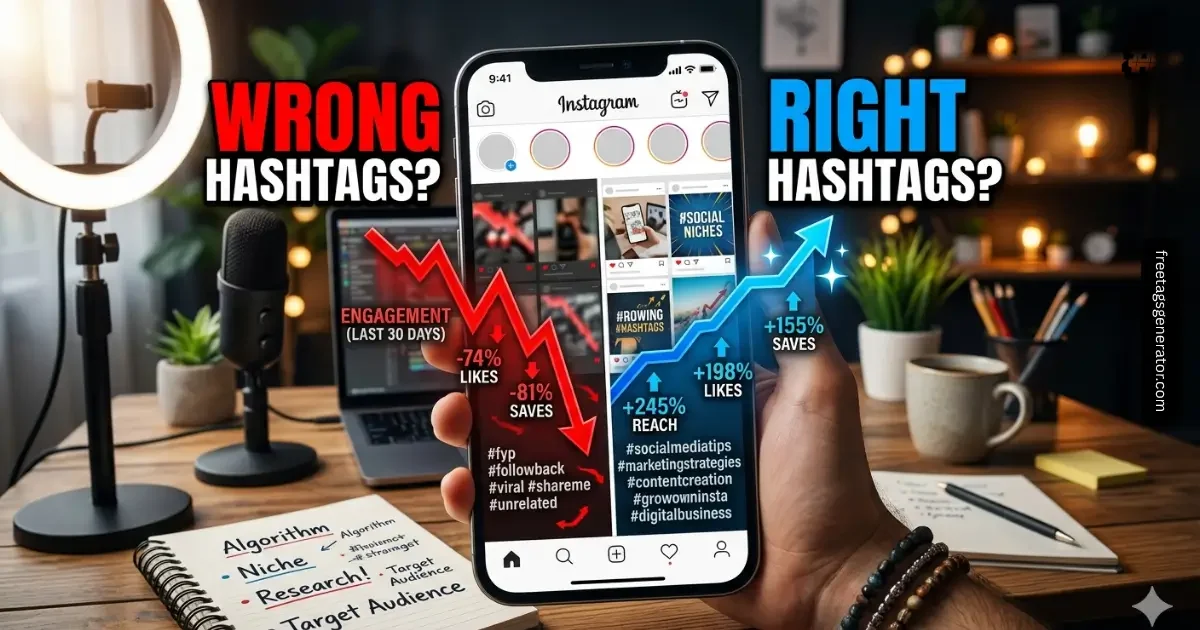
Do Wrong Instagram Hashtags Hurt Your Page?
Introduction
You post something solid. Good lighting. Decent hook. You expect at least some traction. Instead, it dies at 200 views. No reach, no engagement, nothing.
I’ve been there. And most of the time, it wasn’t the content.
It was wrong Instagram hashtags quietly working against the post.

Do Wrong Instagram Hashtags Hurt Your Page?
Yes. Not in a dramatic “shadowban overnight” way. But in a slow, silent way that kills distribution.
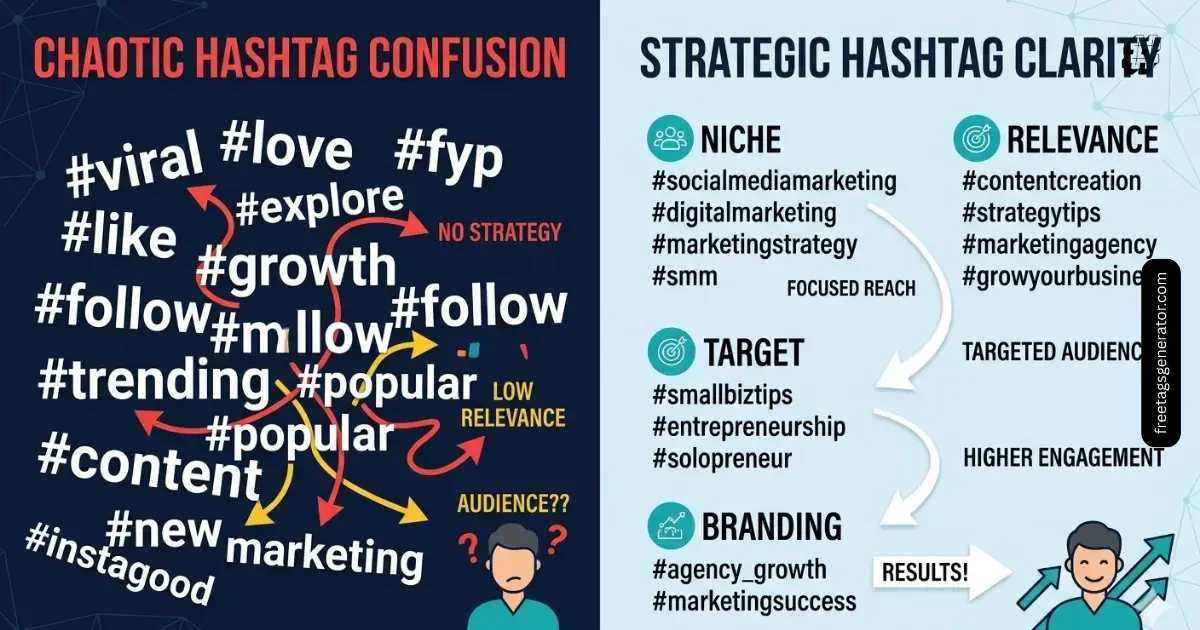
When you use wrong Instagram hashtags, you confuse the algorithm. It doesn’t know who to show your content to. So it plays it safe… and shows it to fewer people.
Think about it like this:
- Instagram tests your content with a small audience
- Hashtags help define who that audience is
- If the signals are messy → the test fails → reach drops
That’s why you’ll sometimes see:
- Low engagement despite good content
- Posts not appearing in hashtag feeds
- Sudden drop in impressions
Can wrong Instagram hashtags hurt my page?
Yes, because they reduce your chances of being shown to the right audience — which matters more than reach itself.
Here’s What Actually Happens When You Use the Wrong Hashtags
Most creators think hashtags are just for “visibility.” That’s outdated thinking.
Today, hashtags are more about categorization than exposure.
When you use ineffective hashtags, here’s what really happens:
1. You attract the wrong audience
If you use broad tags like:
- #love
- #instagood
- #viral
You’re competing with millions of posts. And worse, the audience seeing your content isn’t specific to your niche.
2. Engagement signals drop
Instagram watches:
- Watch time
- Saves
- Shares
- Comments
If the wrong people see your content, they don’t engage. That sends a negative signal.
3. Your content stops getting pushed
This is where people say “my reach is dead.”
It’s not dead. It’s just misdirected.
How to Tell If Your Hashtags Are Killing Your Reach
You don’t need fancy tools. The signs are obvious if you look closely.
Red flags to watch:
- Hashtag impressions near zero
- Posts stuck under 300 views consistently
- No ranking under hashtags
- High-quality content but low engagement
Here’s a quick self-check:
| Metric | Healthy | Problem |
|---|---|---|
| Hashtag Reach | 20–40% of total | Under 5% |
| Engagement Rate | Stable | Dropping |
| Saves | Consistent | Rare |
How do I know if a hashtag is hurting my reach?
If you repeatedly see low engagement and no discovery traffic, your hashtags are likely part of the problem.
Why Hashtags Still Matter (Even in 2026)
There’s a narrative going around that “hashtags don’t matter anymore.”
That’s only half true.
They don’t boost content the way they used to. But they still help the algorithm understand your content.
And that matters more than ever.
My take after testing:
Hashtags won’t save bad content.
But bad hashtags can absolutely hold back good content.
That’s the difference most people miss.
Do hashtags really matter for growth?
Yes — not as a growth hack, but as a clarity signal for the algorithm.
The Real Problem With “Trending” Hashtags
People chase instagram hashtags trending like it’s a shortcut.
It isn’t.
Trending hashtags usually mean:
- High competition
- Mixed audience
- Low relevance
And honestly, this is where most creators go wrong.
Strong opinion:
Using #fyp or #viral everywhere is one of the fastest ways to confuse your content positioning. It works against you more often than it helps.
Why trending tags fail:
- Your post gets buried instantly
- Audience mismatch kills engagement
- Algorithm can’t categorize your niche
Which hashtags go viral?
The ones that match your content and audience. Not the biggest ones.
A Simple Hashtag System That Actually Works
You don’t need 30 random tags. You need structure.
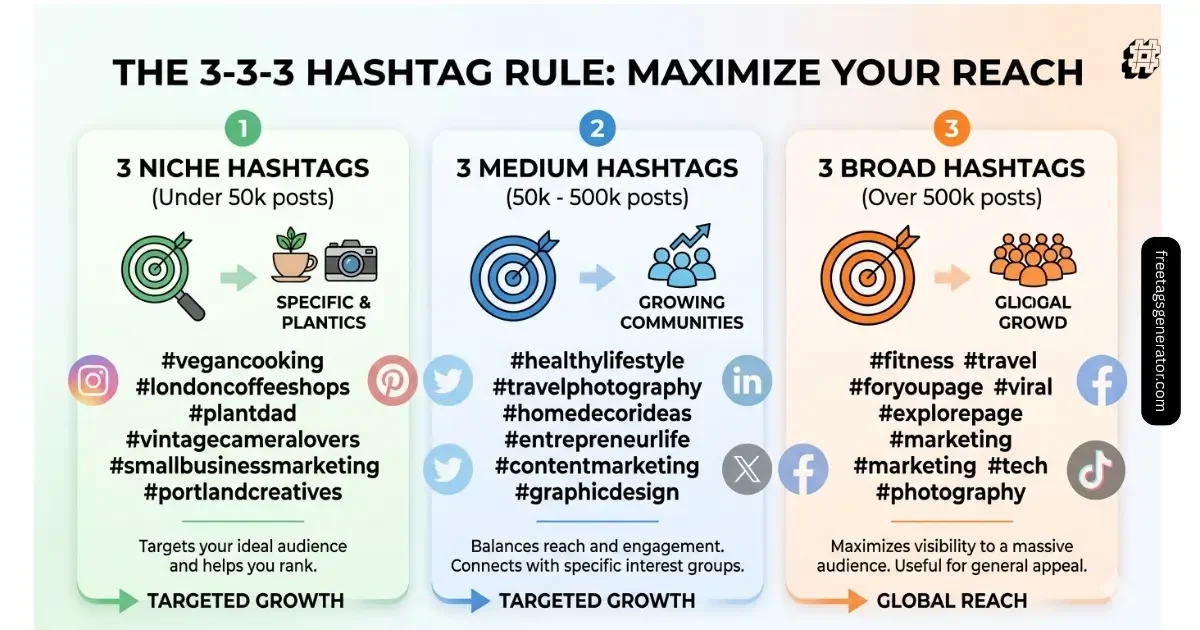
The 3-3-3 hashtag rule explained
This is the simplest system I’ve tested that still works:
- 3 niche-specific hashtags (your exact audience)
- 3 medium hashtags (moderate competition)
- 3 broad hashtags (for reach testing)
Example for a digital creator:
- #contentstrategy
- #instagramgrowthtips
- #reelstips
Then mix with:
- #socialmediamarketing
- #digitalcreator
Then a couple broader ones.
What is the 3-3-3 hashtag rule?
It’s about balancing relevance and reach — not chasing volume.
The 4 types of hashtags you should use
If you understand this, you’re ahead of most creators.
What are the 4 types of hashtags?
- Niche hashtags – very targeted (best for growth)
- Community hashtags – used by your audience
- Content hashtags – describe the post itself
- Branded hashtags – your own tag or campaign
Mixing these creates clarity.
What About Banned or Broken Hashtags?
This is where things get risky.
Some hashtags are:
- Banned
- Flagged
- Or just dead
What are IG banned hashtags?
These are tags Instagram has restricted due to spam or misuse.
Using them can:
- Reduce visibility
- Stop your post from appearing in feeds
- Trigger algorithm distrust
Examples change often, but the pattern is consistent:
- Overused
- Spam-heavy
- Misused content
Is FYP a banned hashtag?
Not officially. But it’s heavily saturated and often ineffective.
Case Study: What Changed When I Fixed My Hashtags
I tested this on a small account stuck at low engagement.
Before:
- 20–25 random hashtags
- Mostly trending tags
- Average views: 300–500
After:
- 9–12 structured hashtags
- Niche-focused
- Removed spam tags
Results (30 days):
- Views jumped to 2,000–6,000 per post
- Saves increased by 3x
- Reach became consistent
Nothing else changed. Same content style.
This is why I don’t treat hashtags as optional.
Instagram vs TikTok: What Most People Get Wrong
TikTok made people lazy with hashtags.
On TikTok:
- The algorithm is stronger
- Content discovery is faster
- Hashtags are less critical
But they still matter for initial categorization.
Does Gen Z use hashtags?
Yes, but differently. They use fewer, more intentional tags.
On Instagram:
- Hashtags still influence discovery
- SEO + captions + hashtags work together
If you copy TikTok hashtag habits directly to Instagram, your reach can drop.
Should You Use Fewer Hashtags Now?
There’s confusion around this.
Why only 5 hashtags?
Some creators report better results with fewer tags because:
- They become more targeted
- Less spam signal
But the real answer:
It’s not about the number. It’s about relevance.
You can use:
- 5 hashtags (very targeted)
- 10 hashtags (balanced)
- 15 hashtags (still fine if relevant)
What is the maximum 5 hashtags?
It’s just a trend — not a rule.
Final Thoughts: Fix This Before You Blame the Algorithm
Most people blame the algorithm too quickly.
But in reality, small things like wrong Instagram hashtags quietly hold your content back.
Before you:
- Change your niche
- Delete posts
- Or assume your account is “dead”
Fix your hashtag strategy first.
Because once your content reaches the right audience, everything changes:
- Engagement improves
- Reach stabilizes
- Growth becomes predictable
Overview
Wrong Instagram hashtags can reduce your reach by confusing the algorithm about your content’s audience. When hashtags don’t match your niche, engagement drops, which signals Instagram to limit distribution. To fix this, use a mix of niche, medium, and broad hashtags that accurately describe your content and target audience.
FAQ Section
Are hashtags bad on IG?
No. They’re just misunderstood. Bad hashtags hurt reach, but relevant ones still help categorize content and improve discoverability.
What are the top 10 hashtags?
There’s no universal list. The “top” hashtags depend on your niche. Broad tags like #love or #viral rarely help smaller accounts grow.
What do 5 hashtags mean?
It usually means creators are focusing on highly targeted hashtags instead of using large sets of random ones.
Is 20,000 views in 2 days viral on Instagram?
For small accounts, yes. For larger accounts, it’s normal performance. Context matters more than numbers.
Can ChatGPT generate hashtags?
Yes, but you still need to filter them. AI can suggest ideas, but you should refine based on your niche and audience behavior.