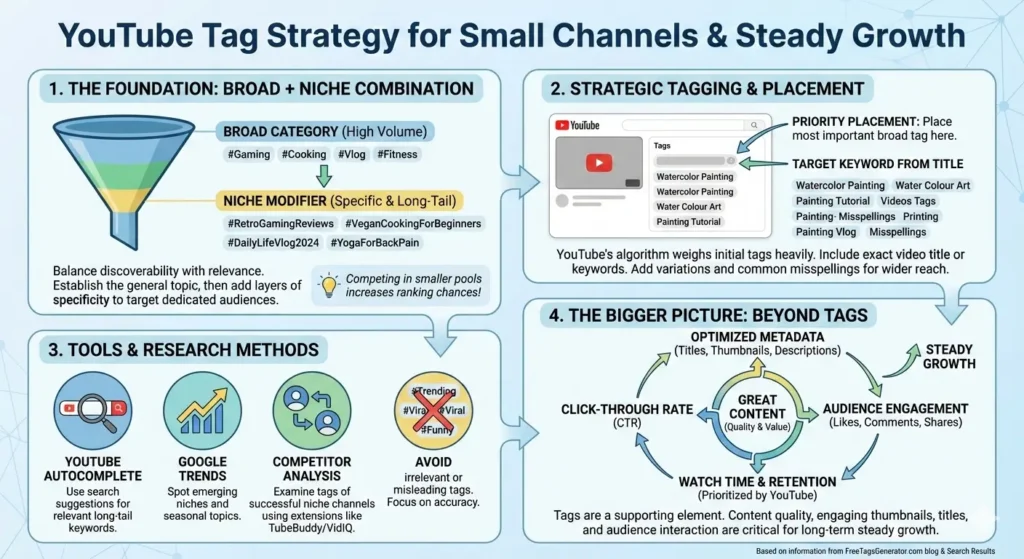

Every year someone declares that YouTube tags are dead. And every year, creators who quietly use them the right way keep winning.
Here’s the truth. Tags are not magic. They will not save bad content. But in 2026, they still play a supporting role in how YouTube understands your video, especially for new channels, niche topics, misspelled searches, and early discovery.
Think of tags as context signals. Titles and descriptions do the heavy lifting, but tags help YouTube connect the dots. When used correctly, they reinforce relevance, protect you from spelling variations, and help your video appear next to the right content.
This guide breaks down how YouTube tags actually work in 2026, how to choose them without guesswork, and how to integrate them into a full YouTube growth strategy. No fluff. No outdated tricks. Just practical advice you can use today.
In this comprehensive guide, we’ll dive deep into YouTube tags and their role in SEO. Whether you’re a seasoned YouTuber or just starting, knowing how to optimize your tags can make a world of difference in your channel’s visibility, especially for small channels. Let’s explore the best strategies to rank your videos higher, grow your audience, and improve your YouTube analytics.
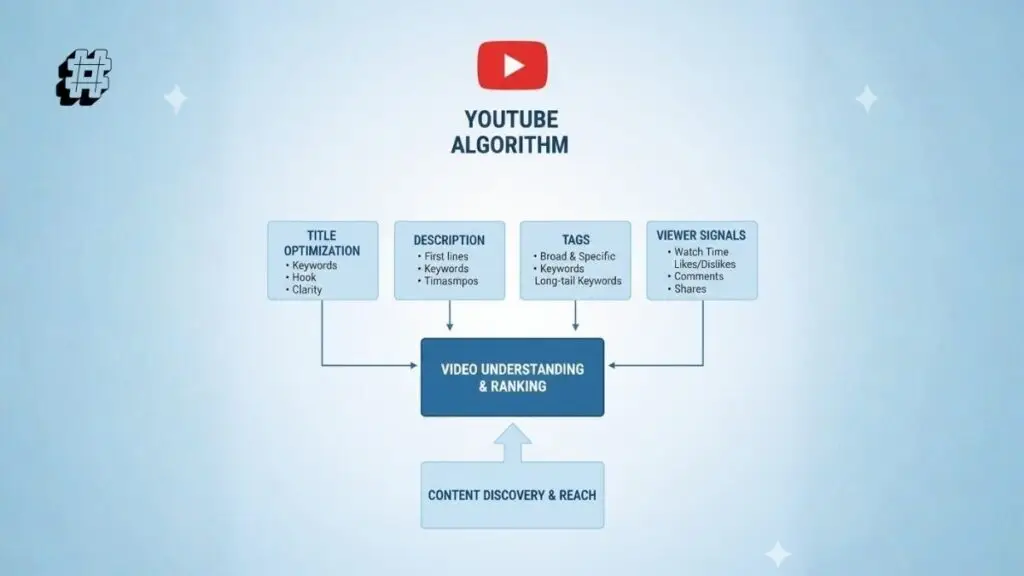
Let’s clear the confusion first.
YouTube’s algorithm in 2026 relies heavily on:
Watch time and retention
Click-through rate
Viewer satisfaction signals
Topic consistency across your channel
Tags are not a ranking button, but they still help in specific situations.
Understanding video context when metadata is unclear
Handling typos and alternate spellings
Associating your video with similar videos
Supporting discovery for small or new channels
They don’t override poor titles or descriptions
They don’t rank videos by themselves
They don’t replace content quality or audience retention
If your video is about “YouTube Shorts growth,” tags help YouTube confirm that topic. If your video is vague, tags alone won’t fix it.
The real win comes when tags support your title, description, and content, not when they try to carry them.
In 2026, YouTube’s algorithm continues to evolve, placing more emphasis on the relevance of tags, metadata, and overall video content quality. Here’s why they matter:
Improved Search Visibility: Tags help your video appear in search results when users enter specific keywords. By using a good mix of primary, secondary, and long-tail tags, you can increase the chances of your video being discovered.
Boosts Suggested Videos: YouTube tags also contribute to video recommendations in the “Suggested Videos” section. The right tags can make your video appear in the recommendations of similar videos, giving you more views and subscribers.
Better Ranking in YouTube Search: Tags are also crucial for YouTube’s ranking system. While it’s no longer the only factor, tags still have significant weight in determining where your video lands in search results.
If you’re targeting a specific market, especially the US, tag strategy changes slightly. We break this down step by step in our guide on optimizing YouTube tags for views in the USA.
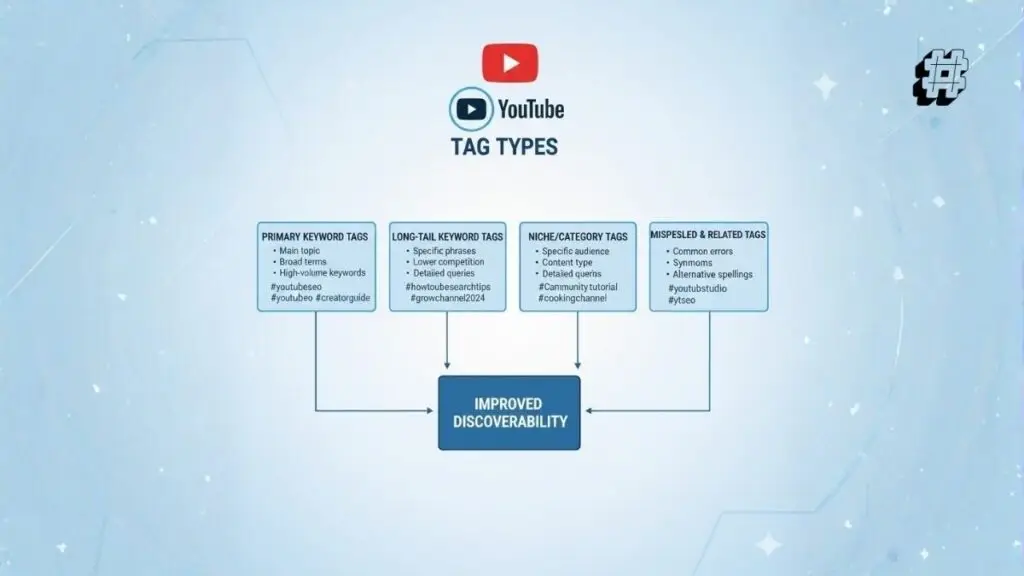
Not all tags are equal. Dumping 500 random keywords into your tag box is one of the fastest ways to waste time.
Here’s how to think about tags in 2026.
These are direct matches to what your video is about.
Example:
ultimate youtube tags guide
youtube tags 2026
youtube tags for growth
These should match your main topic, not every related idea.
This is where most creators get results.
Examples:
how to use youtube tags in 2026
best youtube tags for small channels
do youtube tags still work
These capture search intent, not just keywords.
YouTube still uses tags to understand spelling differences.
Examples:
youtub tags
youtube tagz
you tube tags
This sounds basic, but it works, especially for new channels.
These connect your video to a content cluster.
If your video is about tags, niche tags might include:
youtube seo strategy
youtube metadata optimization
youtube ranking tips
They help YouTube understand the broader topic your channel belongs to.
Primary Tags: Start by using the main keyword or phrase that best describes your video. This tag should be highly relevant and appear in the title, description, and video content as well.
Secondary Tags: Add variations of your main keyword. For instance, if your primary tag is “YouTube SEO,” your secondary tags could include “YouTube ranking,” “SEO tips for YouTube,” and “increase YouTube views.” This expands your reach without overwhelming your viewers or search algorithms.
Long-Tail Tags: These are more specific keywords that focus on niche topics within your video. They may have lower search volumes, but they are highly targeted and can help attract a more relevant audience.
Trending Tags: Incorporating trending topics into your video tags can help increase visibility. However, make sure the tags are still relevant to your content. Use tools like Google Trends and YouTube’s trending page to find what’s hot.

Guessing tags is why most creators think tags don’t work.
Here are methods that actually help.
Start typing your topic into YouTube search and note what appears.
These suggestions come from real user searches, which makes them valuable.
Example:
Typing “youtube tags” may show:
youtube tags for views
youtube tags generator
youtube tags for small channels
Those are strong long-tail ideas.
Look at videos ranking in the top 5 for your topic.
Pay attention to:
Their title wording
Description phrases
Common patterns in their topics
You don’t copy tags blindly. You extract themes.
A good YouTube tags generator saves time by expanding variations and long-tail ideas you may miss.
The key is filtering. Don’t use everything it gives you. Pick tags that:
Match your actual content
Reinforce your title and description
Fit your niche
 If you want fast, clean tag ideas without spam, try our YouTube Tags Generator. It’s built for real creators, not keyword dumping.
This is one of the most common questions.
In 2026, the sweet spot is:
10–15 highly relevant tags
Not the full character limit
No unrelated keywords
Why?
Too many tags dilute relevance. YouTube learns faster when signals are clear and consistent.
Focus on:
1 main topic
2–3 supporting ideas
A few long-tail variations
That’s it.
Here’s how tags interact with YouTube’s algorithm:
Contextual Matching: YouTube’s algorithm uses video tags to match videos with viewers’ search queries and interests. The better your tags reflect your content’s relevance, the higher your video will rank.
User Engagement Signals: Tags work alongside other factors like click-through rate (CTR), average view duration, and user interaction (likes, comments, shares). If your tags lead to high engagement, the algorithm rewards your video with better visibility.
Channel Authority: Over time, YouTube builds a profile for your channel based on your content and engagement. Consistently using relevant tags will help establish your channel’s authority on specific topics.
Tags alone won’t grow your channel. But when combined correctly, they help reinforce your topic authority.
Here’s how everything connects.
Your title should clearly state the main topic in human language.
Bad title:
“YouTube Tips That Work”
Good title:
“Ultimate YouTube Tags Guide 2026: Rank & Grow Your Channel”
Use the first 2–3 lines to explain the video clearly.
Include:
Your primary keyword naturally
One or two secondary phrases
A clear summary of the video
Tags should support, not repeat blindly.
Say your main topic out loud early in the video.
YouTube uses speech recognition. If your tags say “youtube tags guide” but you never mention tags, that’s a mismatch.
If you repeatedly publish videos about YouTube growth, SEO, and tagging strategies, YouTube understands your niche faster.
Tags help reinforce that consistency over time.
Even experienced creators mess this up.
Adding “MrBeast” or viral trends to unrelated videos does nothing. It can actually confuse YouTube.
Your video is different. Your audience is different. Use competitor research for ideas, not duplication.
Repeating the same keyword 20 times does not increase relevance. It weakens it.
Tags won’t carry your video, but skipping them entirely removes a useful context signal, especially for smaller channels.

If you want to go beyond basics, these strategies help.
Ask yourself what problem the viewer is trying to solve.
Examples:
“how to rank youtube videos”
“youtube tags for beginners”
“youtube seo for small channels”
Intent matters more than volume.
If you’re building a channel brand, add:
Your channel name
A unique series name
This helps YouTube associate your videos together.
You don’t need to upload again. Update:
Tags
Description clarity
Title alignment
Sometimes relevance drift is the real issue.
Let’s be honest.
Tags will not:
Turn a bad video into a viral hit
Replace thumbnails or hooks
Fix low retention
Tags can:
Help YouTube understand your video faster
Improve early discovery
Support niche visibility
Reduce mismatch traffic
When used correctly, they work quietly in the background.
Do YouTube tags still work in 2026?
Yes, but as a supporting signal. They help with context, spelling variations, and niche discovery, especially for small channels.
How many tags should I use per video?
Aim for 10–15 relevant tags. Quality and relevance matter more than quantity.
Are tags more important for new channels?
Yes. New channels benefit more because YouTube has less historical data to understand their content.
Should tags match the title exactly?
Your main tag should align closely with your title, but variations and long-tail phrases are encouraged.
Can I use the same tags on every video?
Only if the topic is the same. Reusing unrelated tags across different topics can confuse the algorithm..
Is a YouTube tags generator safe to use?
Yes, if you filter the results and only use tags that truly match your content and audience intent.
The biggest mistake creators make with YouTube tags is expecting too much from them or ignoring them completely.
In 2026, tags are not about gaming the algorithm. They’re about clarity. When your title, description, content, and tags all point in the same direction, YouTube understands who your video is for and where it belongs.
Use fewer tags. Make them relevant. Focus on intent. Support your content instead of stuffing keywords.
If you want a faster way to build clean, relevant tags without overthinking it, check out our YouTube Tags Generator and make tags a simple part of your upload process, not a guessing game.
Grow smart. Grow steady. That’s how channels win long-term.