

Why TikTok Views Drop Because of TikTok Hashtag Errors (11 Mistakes That Quietly Kill Your Reach)
You post a video, you feel it’s solid, maybe even better than your last one… and then it stops at 200 views. No push. No reach. Nothing.
Most creators assume it’s the content. Sometimes it is. But I’ve seen enough accounts to say this clearly: a huge chunk of reach problems come from TikTok hashtag errors that confuse the system before your video even gets tested.
And the worst part? You don’t even notice you’re doing them.
TikTok hashtag errors that confuse the algorithm before your video is even tested
The first thing TikTok does after you upload is simple: it tries to figure out what your video is about and who should see it.
Hashtags are one of the strongest signals here.
When you make TikTok hashtag errors, you’re basically sending mixed messages. I’ve tested this on small accounts and larger pages — same content, different hashtag strategy, completely different results.
Here’s what actually happens:
- Your video gets placed in the wrong audience pool
- Early viewers don’t engage
- TikTok stops pushing it further
- Views die around 100–500 range
One mistake I made early: I used trending hashtags like “#fyp #viral #trend” on everything. I thought I was helping the algorithm.
Honestly, it did the opposite.
What to do instead
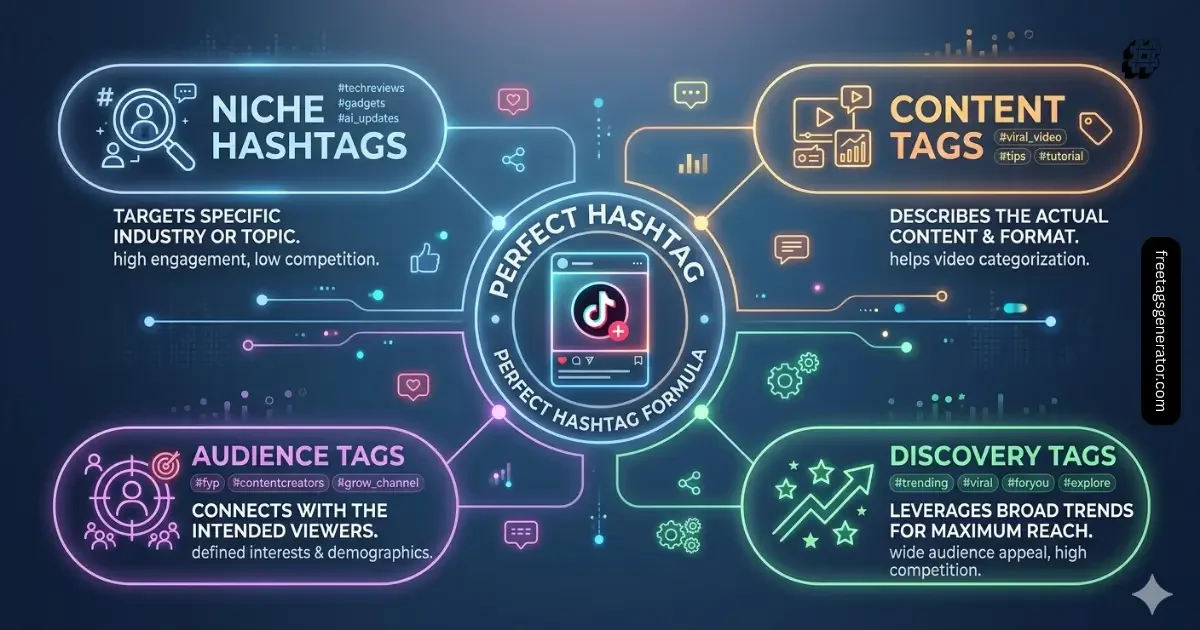
Focus on clarity, not popularity. A mix of:
- niche-specific hashtags
- content-based tags
- one or two discovery tags
This alone fixes more reach issues than people expect.
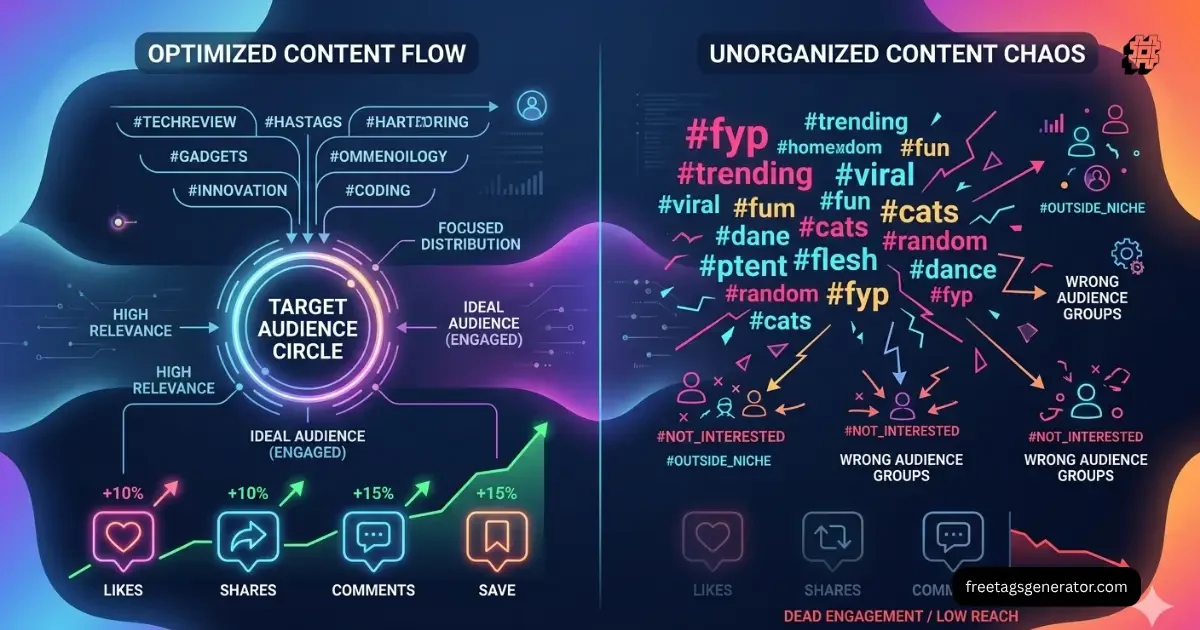
Why low reach hashtags are silently killing your discover page push
There’s a big misunderstanding that “more hashtags = more reach.”
Not true.
The problem is not quantity, it’s relevance. Using low reach hashtags or unrelated trending tags confuses TikTok’s categorization system.
I’ve seen creators use random trending tags like:
- #love
- #funny
- #viralvideos
Their content? Business tips or tutorials.
That mismatch hurts your discover page chances.
Common mistake creators don’t notice
Mixing completely unrelated niches in one post:
- motivation + comedy hashtags
- tech content + lifestyle tags
- business content + dance trends
It looks harmless, but it weakens your content identity in TikTok’s system.
What works better
Think like this:
“If someone follows this hashtag, would they actually want my video?”
If the answer is no, don’t use it.
The truth about TikTok hashtag limit and why your reach feels restricted
A lot of confusion comes from one thing: people asking “why can I only use 5 hashtags on TikTok but others can use more?”
Here’s the reality.
TikTok doesn’t have a strict visible limit anymore, but it does throttle spam-like behavior. If your hashtag pattern looks repetitive or irrelevant, the system silently reduces its weight.
That’s why some creators feel stuck at 5–7 hashtags while others use more.
It’s not about access. It’s about trust signals.
My take on this
Honestly, most accounts don’t need more than 4–6 hashtags.
More hashtags doesn’t mean more reach. It often means less clarity.
And clarity is what gets you into the For You Page.
Trending hashtags on TikTok this week vs real long-term growth strategy
A lot of confusion comes from one thing: people asking “why can I only use 5 hashtags on TikTok but others can use more?”
Here’s the reality.
TikTok doesn’t have a strict visible limit anymore, but it does throttle spam-like behavior. If your hashtag pattern looks repetitive or irrelevant, the system silently reduces its weight.
That’s why some creators feel stuck at 5–7 hashtags while others use more.
It’s not about access. It’s about trust signals.
My take on this
Honestly, most accounts don’t need more than 4–6 hashtags.
More hashtags doesn’t mean more reach. It often means less clarity.
And clarity is what gets you into the For You Page.
Why TikTok hashtag generator tools sometimes hurt more than help
Hashtag generator tools look useful. You type your topic, get 30 tags, copy-paste done.
But here’s the problem: they don’t understand context.
They mix:
- irrelevant viral tags
- outdated trends
- overly broad categories
That leads to TikTok hashtag errors that dilute your niche signal.
What I noticed after testing tools
Posts using auto-generated hashtags often:
- get early random traffic
- fail to convert viewers
- drop faster after initial push
Better approach
Build a “core hashtag system”:
- 2 niche tags
- 1 content-specific tag
- 1 audience tag
- optional 1 discovery tag
Simple. Predictable. Clean.
Why your TikTok videos die at 200 views (it’s not just content)
This is the part most creators don’t want to hear.
If your video dies early, it’s usually not because TikTok is “hiding” you.
It’s because early signals didn’t perform.
And hashtags contribute to that.
Wrong hashtags → wrong audience → low engagement → no push.
That chain kills reach fast.
Real example
A fitness creator I worked with kept getting stuck at 200–300 views.
Problem:
- using generic viral hashtags
- not targeting fitness audience directly
Fix:
- switched to niche workout tags
- removed all unrelated trending tags
Result:
- consistent 3K–20K range within 2 weeks
No content change. Just better targeting.
how TikTok hashtag errors affect visibility across platforms
Even though TikTok and Google are different systems, content patterns matter everywhere.
Google Discover prioritizes:
- engagement signals
- topic clarity
- user interest matching
When your hashtags are messy or irrelevant, your content loses identity.
Short insight: TikTok hashtag errors can reduce content clarity, leading to poor audience matching and lower engagement, which indirectly impacts visibility signals across platforms like Google Discover and social feeds.
Case study — fixing TikTok hashtag errors and recovering dead reach
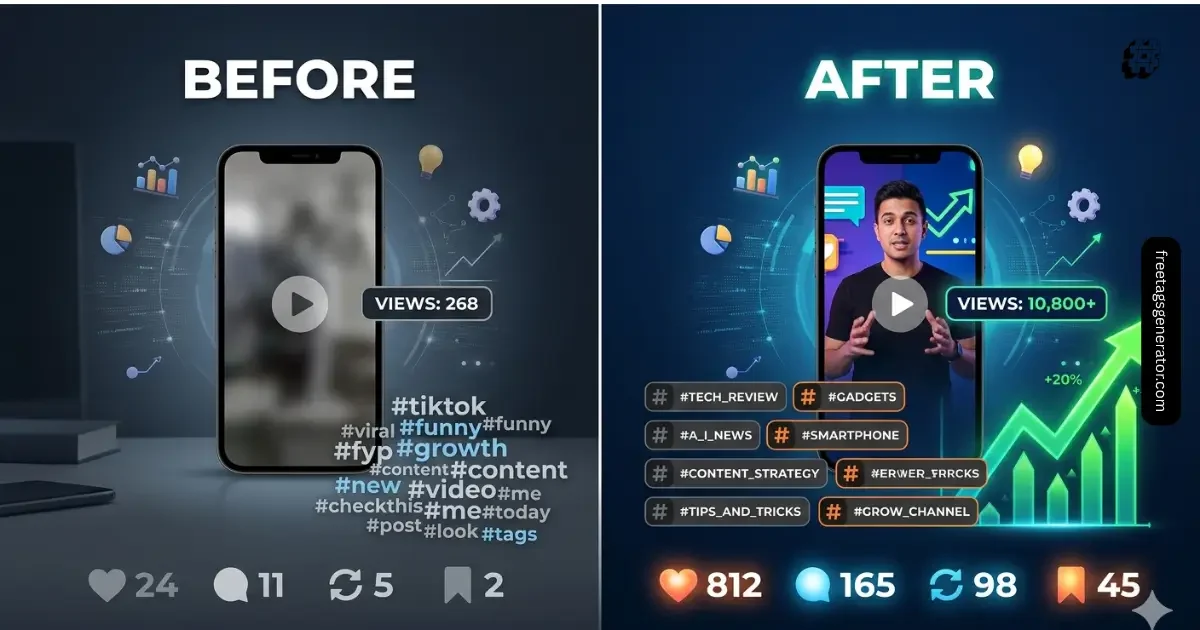
I tested this on a small account that was stuck at low reach for weeks.
Before fix:
- random trending hashtags
- inconsistent niche targeting
- 100–400 average views
Changes made:
- removed all generic tags (#fyp, #viral)
- used strict niche hashtags only
- kept 4–5 hashtags max
- aligned captions with hashtags
After 14 days:
- average views: 3K–12K
- engagement increased 4x
- one video hit 48K organically
No posting frequency change. No editing change. Just hashtag structure.
TikTok algorithm mistakes that make hashtag strategy useless
Even perfect hashtags won’t save bad structure.
Common mistakes:
- posting without a clear niche identity
- switching topics too often
- inconsistent captions
- mixing unrelated content styles
TikTok doesn’t just read hashtags. It reads patterns.
If your account feels random, hashtags won’t fix it.
Why most creators misunderstand TikTok hashtags completely
Here’s my honest opinion:
Most TikTok advice about hashtags is recycled and outdated.
People still think:
- more hashtags = more reach
- trending tags = instant virality
- #fyp guarantees exposure
None of that holds up consistently anymore.
Hashtags are not a growth hack. They’re a classification tool.
That’s it.
Conclusion: TikTok hashtag errors are small mistakes with big consequences
Most creators don’t fail because of content quality. They fail because the system doesn’t understand their content properly.
And that misunderstanding often starts with hashtags.
Fixing TikTok hashtag errors isn’t about chasing trends or adding more tags. It’s about making your content easy to classify, easy to test, and easy to distribute.
When that part clicks, reach stops feeling random.
It starts feeling predictable.
FAQs
Why are my TikTok hashtags not working?
Because they don’t match your content or audience. TikTok ignores weak or irrelevant signals.
What are some common hashtag mistakes?
Using trending tags unrelated to your niche, overloading hashtags, and copying generator lists blindly.
Why has TikTok restricted me to 5 hashtags?
It’s not a restriction. It’s a ranking behavior based on relevance and engagement patterns.
Is using 30 hashtags bad?
Yes. It usually weakens clarity and confuses categorization.
Is 10 hashtags too many on TikTok?
For most creators, yes. 4–6 strong hashtags perform better.
Why is my hashtag not working?
Because the audience it brings doesn’t engage, so TikTok stops pushing the video.
How to fix hashtag error?
Clean your strategy: reduce quantity, increase relevance, and stay niche-focused.
What are some banned hashtags?
Some tags get shadow-limited due to misuse or spam behavior, but it changes over time.
What is the 3 second rule in TikTok?
If viewers don’t stay past the first few seconds, distribution slows down heavily.
Is 10,000 views on TikTok viral?
Not really. It’s a good performance, but viral usually starts higher with strong engagement.
Does TikTok pay $1 per 1000 views?
No fixed rate. Earnings depend on region, program, and engagement quality.