Stop Using Random YouTube Tags, It’s Killing Your Reach
Introduction
If your YouTube videos are getting low impressions, weak discovery, or no growth at all, there’s a good chance random YouTube tags are part of the problem.
Most creators treat tags like an afterthought. They paste whatever looks popular, copy tags from competitors, or use a generator without thinking. It feels productive, but it quietly damages reach.
YouTube’s system doesn’t reward randomness. It rewards clarity, relevance, and consistency.
In this guide, you’ll learn:
Why random YouTube tags hurt reach
How YouTube actually uses tags today
How to choose YouTube tags correctly
A simple, repeatable YouTube tags strategy
When and how to use a YouTube tags generator free without harming growth
No fluff. Just practical steps you can apply to your next upload.
What Are Random YouTube Tags (And Why Creators Use Them)
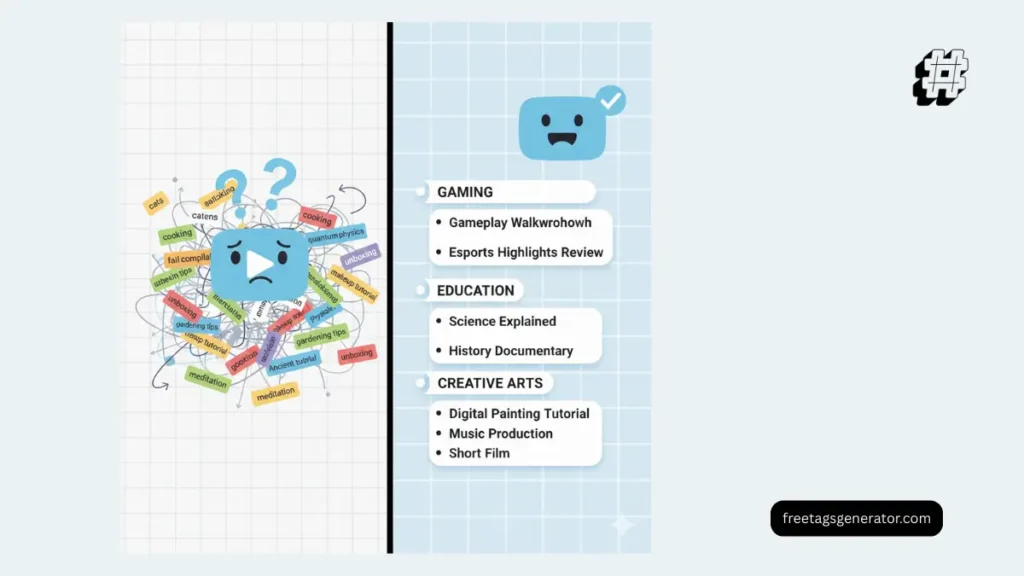
Random YouTube tags are tags that:
Are copied blindly from other videos
Don’t match the video’s real topic
Target broad keywords with no context
Are added just to “fill the tag box”
Creators use them because:
They think more tags equals more reach
They believe tags alone can rank videos
They rely on outdated YouTube SEO advice
The problem is not using tags.
The problem is using the wrong YouTube tags for videos.
How Random YouTube Tags Hurt Your Reach
They Confuse YouTube’s Understanding of Your Video
YouTube uses tags as a support signal, not a ranking hack.
When your tags don’t match:
Title
Description
Spoken content
Viewer behavior
YouTube gets mixed signals. That weakens trust in your video.
This is why many creators complain about:
YouTube tags not working
Videos not appearing in search
Low impressions despite “SEO”
The system isn’t broken. The signals are.
They Attract the Wrong Viewers (Or None at All)
Random tags can:
Show your video to the wrong audience
Reduce click-through rate
Lower watch time
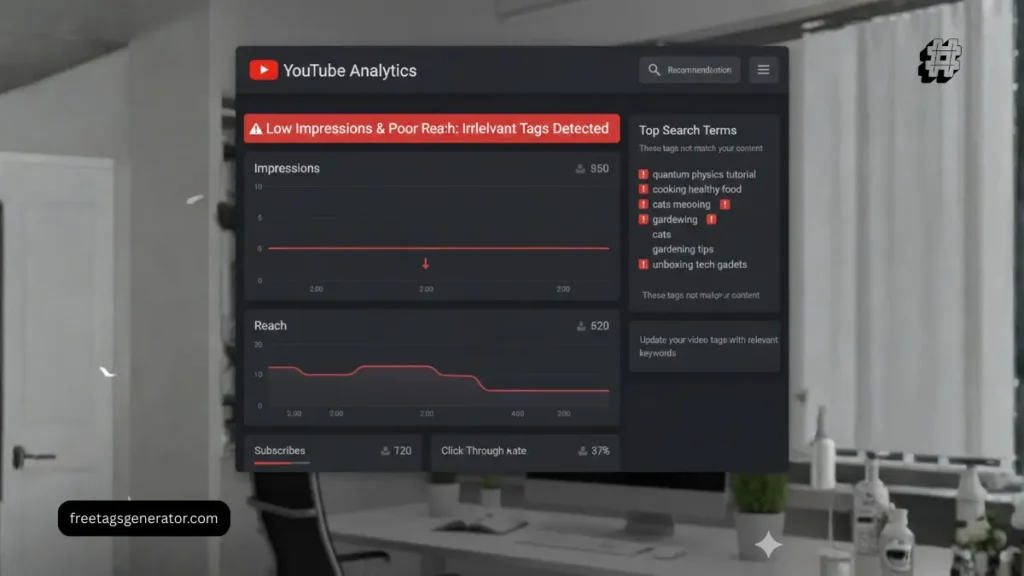
When viewers bounce, YouTube pulls back distribution.
That’s how random YouTube tags hurt reach without you noticing.
They Block Long-Term Channel Growth
YouTube learns from patterns.
If your tags are inconsistent:
Your channel topic becomes unclear
You lose topical authority
Future videos struggle more
This is why some channels never grow, even after years.
Do YouTube Tags Still Matter in 2026?
Yes. But not the way most people think.
What tags actually do:
Help YouTube understand context
Fix spelling variations
Support discovery for niche terms
What tags do NOT do:
Instantly rank videos
Override bad content
Replace titles and descriptions
YouTube SEO tags for visibility only work when aligned with everything else.
Random YouTube Tags vs Strategic Tags (Quick Comparison)
| Random Tags | Strategic Tags |
|---|---|
| Copied or guessed | Research-based |
| Broad and vague | Specific and contextual |
| Don’t match content | Match topic exactly |
| Hurt engagement | Support ranking |
| Short-term thinking | Long-term growth |
How to Choose YouTube Tags Correctly
This is where most creators get it wrong.
Step 1 – Start With One Clear Topic
Every video needs:
One main idea
One main keyword
Ask yourself:
“If someone searches one thing, what should it be?”
That becomes your primary tag.
Step 2 – Use Keyword Variations, Not Random Words
Good YouTube video tags optimization includes:
Singular and plural versions
Natural phrasing
Search intent variations
Example:
random youtube tags
random YouTube tags hurting reach
wrong YouTube tags for videos
These support discovery without confusing YouTube.
Step 3 – Match Tags With Title and Description
If your tags don’t appear in:
Title
First 2 lines of description
They’re weak.
Strong tags always reinforce visible text.
Step 4 – Limit, Don’t Stuff
More tags do not mean better results.
Best practice:
10 to 20 highly relevant tags
No unrelated trending keywords
No competitor channel names
This is how effective YouTube tags strategy works in real channels.
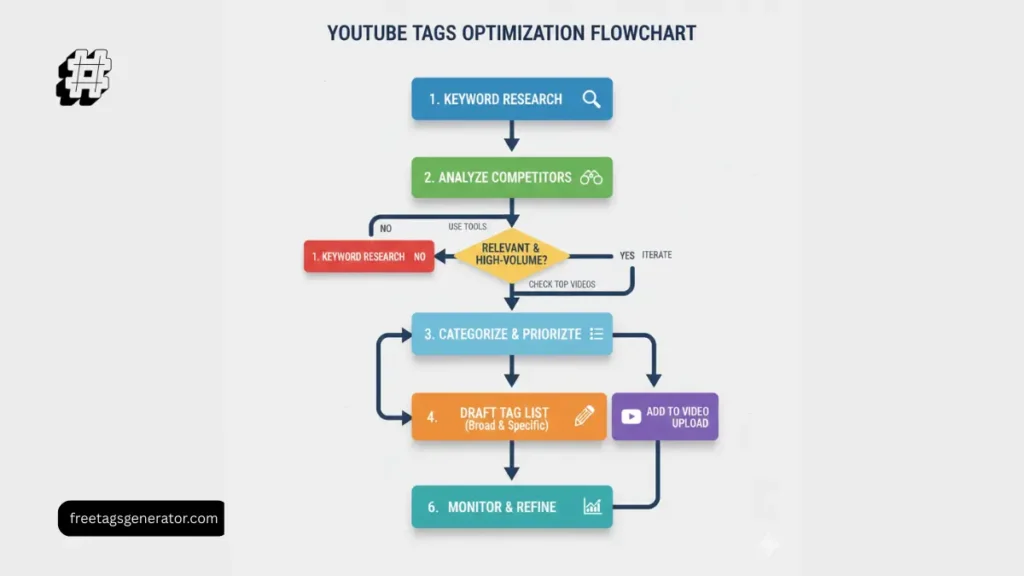
Best YouTube Tags for Growth (What Actually Works)
The best YouTube tags are:
Specific
Intent-based
Closely tied to the video promise
Focus on:
How-to phrases
Problem-based keywords
Niche-specific searches
Growth comes from relevance, not volume.
Using a YouTube Tags Generator Free (The Right Way)
Tag generators are tools, not strategies.
When They Help
Brainstorming keyword variations
Finding long-tail phrases
Catching spelling differences
When They Hurt
Copy-pasting everything
Using tags unrelated to content
Ignoring search intent
If you use a YouTube tags generator free, always:
Manually review tags
Remove anything off-topic
Align with title and description
Tools support thinking. They don’t replace it.
Simple YouTube Tags Strategy You Can Reuse
Use this for every upload:
Define one main keyword
Add 3–5 close variations
Add 5–10 supporting long-tail tags
Match tags to title and description
Keep tags consistent across similar videos
This builds topical authority over time.
Common Tag Mistakes That Kill Visibility
Copying competitor tags blindly
Using trending tags with no relevance
Stuffing brand names everywhere
Changing tag style every video
These mistakes explain why creators say:
“My YouTube tags are not working”
They are working. Just against you.
Tags Alone Won’t Save Bad Content (But They Can Boost Good Content)
Tags amplify what already exists.
If your video has:
Clear topic
Strong hook
Good retention
Tags help YouTube push it further.
If not, tags won’t fix it.
That’s why tags that help YouTube ranking always support quality, not replace it.
FAQ Section
Are random YouTube tags bad for every channel?
Yes. Even small channels suffer because YouTube can’t identify consistent topics.
How many YouTube tags should I use?
Usually 10–20 relevant tags. Quality matters more than quantity.
Do YouTube tags still affect ranking?
They support understanding and discovery but don’t directly rank videos alone.
Can I use the same tags on multiple videos?
Only if the videos are very closely related. Otherwise, adjust them.
Are YouTube tags generators safe to use?
Yes, if used carefully. Never paste tags without reviewing relevance.
What’s better, broad or niche tags?
Niche tags. They attract the right audience and improve engagement.
Conclusion
Random YouTube tags don’t just fail to help.
They actively hold your channel back.
When you choose YouTube tags correctly, you:
Improve clarity
Increase visibility
Build long-term growth
Tags are not magic. They’re signals.
If you want consistent results, stop guessing and start aligning every tag with real intent.
Ready to go deeper? Read the full YouTube SEO Guide to see
how smart tags fit into a complete visibility and growth strategy.