
9 Low-Competition Instagram Hashtags That Actually Work in 2026
You posted something you actually cared about. Clean edit, decent hook, solid idea. Then you checked back a few hours later… 73 views. Maybe 112 if you’re lucky.
That’s not a content problem. It’s almost always a low-competition Instagram hashtags problem.
I’ve managed small accounts, automation pages, and niche meme profiles. The difference between posts that die at 100 views and posts that cross 10K is often just better hashtag targeting.
In this post, I’m going to show you 9 types of hashtags that still work in 2026, how to find them, and how to actually use them if you’re trying to grow a small page or TikTok automation account.
Most Hashtags Don’t Kill Reach — Bad Context Does
Before we get into the list, you need to understand one thing.
Instagram doesn’t push content because of hashtags. It uses hashtags to understand where your content belongs.
That means if your hashtags are too broad or mismatched, your post gets shown to the wrong people. They don’t engage. The algorithm backs off. Your reach dies early.
That’s why low-competition hashtags matter. Not because they’re “easier,” but because they’re more accurate.
1. Micro-Niche Hashtags (Under 50K Posts)
The problem
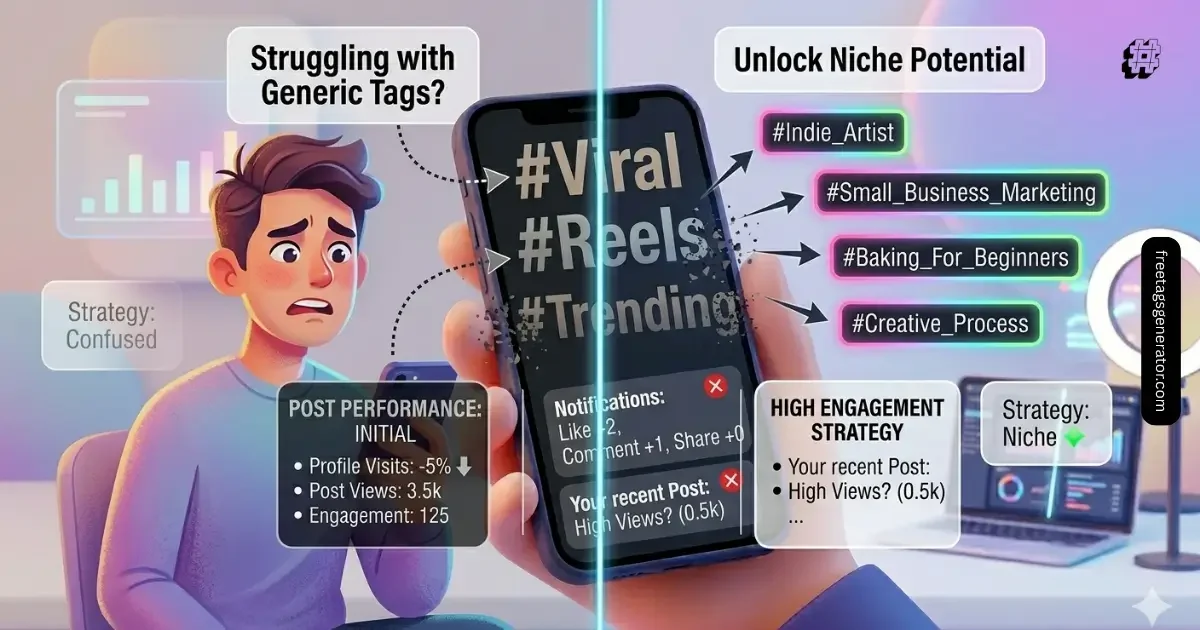
Most creators chase big hashtags like #viral or #reels. These are overcrowded. Your content disappears instantly.
Real example
I worked on a motivation page posting short clips. Using #motivation got zero traction. Switching to #studentmotivationdaily and #selfdisciplinehabits changed everything. Same content. 4x reach.
What to do instead
Look for hashtags between 5K and 50K posts. These are small enough to compete but active enough to matter.
Use tools like: hashtag generator tool
to quickly find these without guessing.
2. Intent-Based Hashtags (Search Behavior)
The problem
You’re tagging topics. The algorithm cares more about intent.
Real example
Instead of #fitness, a creator used #howtolosebellyfatfast. The second one matches what people actually search.
What to do instead
Think like a user typing into search. Not like a creator tagging content.
Ask yourself:
“What would someone search to find this?”
How to find low competition hashtags?
Start with one keyword. Then break it down into:
- Problem-based phrases
- Beginner-level searches
- Specific audience needs
Then filter by post count. That’s your sweet spot.
3. “Beginner Audience” Hashtags
The problem
Everyone wants to target advanced or viral audiences. That space is crowded.
Real example
A content page switched from #entrepreneurmindset to #startabusinessfromhome. Engagement doubled because beginners engage more.
What to do instead
Use beginner-friendly hashtags like:
- #smallpagegrowth
- #newcreatorjourney
- #startinginstagram
These audiences are more likely to interact.
4. Content Format Hashtags
The problem
You’re only tagging your niche, not your format.
Real example
A reel with storytelling format added #storytimereels and #relatablecontent. Watch time increased because the algorithm pushed it to viewers who like that format.
What to do instead
Add 2–3 hashtags that describe how your content is delivered:
- #shortstoryvideo
- #loopreels
- #fastpacedcontent
5. Small Community Hashtags
The problem
Big hashtags are impersonal. Small communities actually engage.
Real example
A meme page used #desimemesdaily instead of generic tags. Engagement rate went up even with fewer impressions.
What to do instead
Find hashtags where the same users engage repeatedly. That’s where growth actually starts.
6. “Problem-Solution” Hashtags
The problem
Most hashtags describe content. They don’t connect with pain points.
Real example
Instead of #productivity, using #cantfocushelp or #procrastinationtips brought in higher saves and shares.
What to do instead
Use hashtags that reflect problems:
- #whyiamnotgrowing
- #lowengagementfix
- #contentstuck
These attract the right audience instantly.
Do hashtags increase SEO?
Yes, but not in the way most people think.
They don’t rank your post like Google SEO. They help Instagram understand your content and decide who to show it to first.
That first audience decides everything.
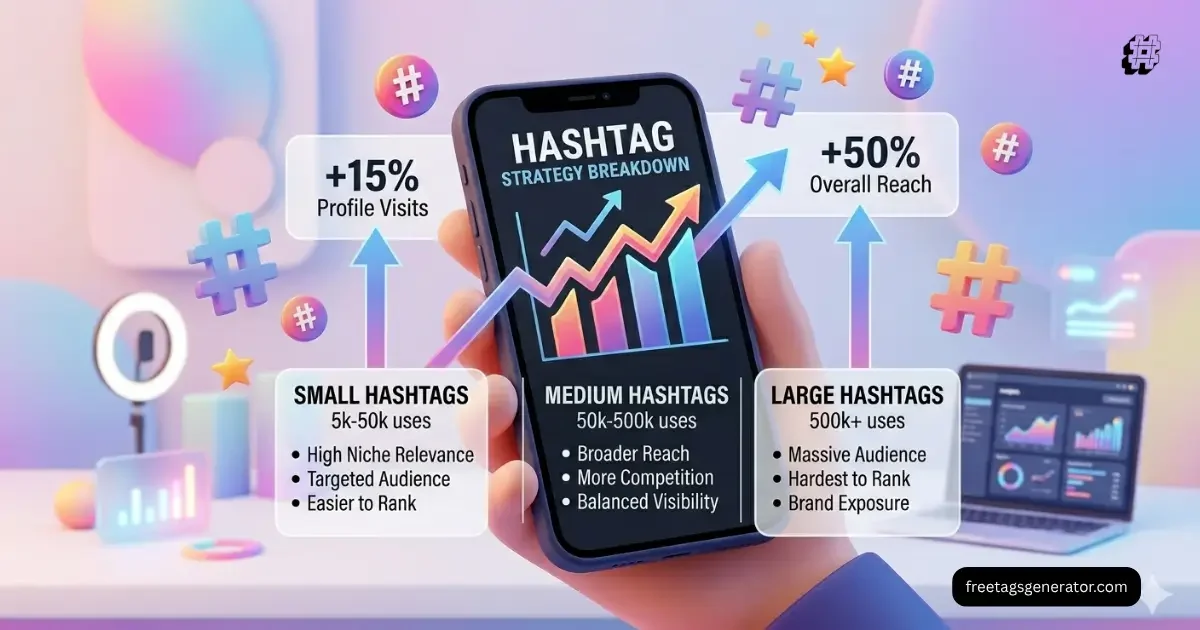
7. Hybrid Hashtag Strategy (The Only One That Works Now)
The problem
People either use all small hashtags or all big ones. Both are wrong.
Real example
One page I tested used:
- 3 small hashtags (under 50K)
- 2 medium (50K–500K)
- 1 larger (500K–1M)
That mix gave consistent reach instead of random spikes.
What to do instead
Follow a simple structure:
- 3 low competition
- 2 mid competition
- 1 slightly competitive
That’s it. Not 30 hashtags.
What is the 5-3-1 rule on Instagram?
It’s a simplified version of the hybrid strategy:
- 5 niche hashtags
- 3 mid-level hashtags
- 1 broad hashtag
Honestly, most people overcomplicate this. The real goal is balance, not exact numbers.
8. Time-Relevant Hashtags (Trend Layering)
The problem
Static hashtags don’t capture momentum.
Real example
Adding tags related to current trends or events boosted early reach for reels tied to trending audio.
What to do instead
Layer in 1–2 hashtags connected to:
- Current trends
- Seasonal topics
- Viral formats
Don’t overdo it.
9. Branded + Personal Hashtags
The problem
You’re building reach, but not identity.
Real example
A creator added a custom tag like #buildwithali across posts. Over time, followers started using it too.
What to do instead
Create one unique hashtag for your page. Use it consistently.
It won’t grow your reach immediately, but it builds long-term authority.
What Actually Changed (A Real Example)
I ran a test on a small automation page reposting TikTok-style clips.
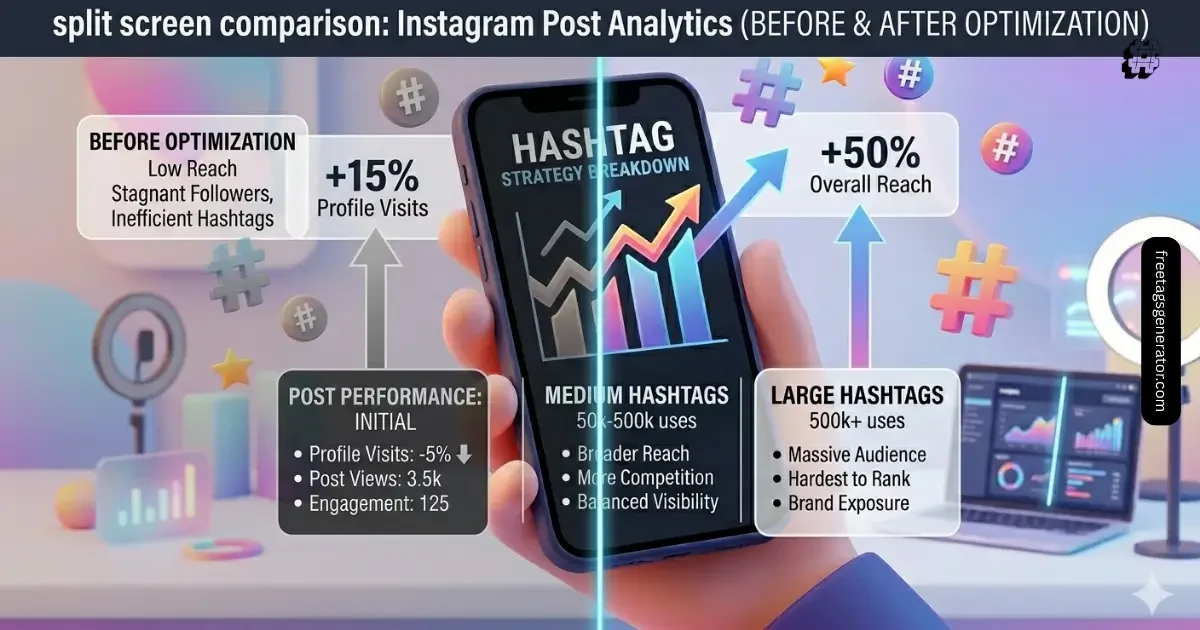
Before:
- 15 hashtags
- Mostly broad (#viral, #fyp, #reels)
- Average views: 120–300
After:
- 6 hashtags total
- 3 micro-niche
- 2 intent-based
- 1 mid-level
Results (30 days):
- Average views: 1,800–4,500
- Higher saves and shares
- More consistent reach
Nothing else changed. Same content style. Same posting time.
Just better hashtag targeting.
Here’s What Actually Happens When You Use the Wrong Hashtags
This is the part most creators ignore.
When you use irrelevant or overly broad hashtags:
- Instagram shows your post to the wrong audience
- They scroll past quickly
- Your retention drops
- The system stops pushing your content
It’s not that your content is bad.
It’s that it never reached the right people.
Are hashtags still relevant in 2026?
Yes. But not in the old way.
They don’t “boost” posts anymore. They classify them.
That means fewer, smarter hashtags beat long lists every time.
My Honest Take (Most People Won’t Like This)
Most hashtag advice online is outdated.
Using 30 hashtags? Waste of time.
Copy-pasting viral tags? Even worse.
If I had to be blunt: hashtags are not your growth engine anymore. They’re your targeting system.
Your content still has to perform.
But if your targeting is wrong, your content doesn’t even get a fair chance.
Conclusion
If your posts are stuck under 200 views, don’t rush to blame your editing, your hooks, or the algorithm.
Look at your hashtags first.
Low-competition Instagram hashtags aren’t about finding some hidden trick. They’re about clarity. You’re telling Instagram exactly who should see your content.
Here’s what you should do in the next 10 minutes:
Take one of your recent posts. Remove all broad hashtags. Replace them with 3 micro-niche, 2 intent-based, and 1 mid-level tag.
Then track what happens over your next 5 posts.
If you want to speed this up, use a tool like: free hashtag generator
to generate targeted hashtags based on your niche.
FAQs
Can ChatGPT generate hashtags?
Yes, but most outputs are generic unless you guide it properly. If you just ask for hashtags, you’ll get broad and overused ones. The key is to provide niche context, audience type, and content intent. Even then, you should filter results manually based on competition level.
What are the top 3 Instagram hashtags?
There’s no universal top 3 hashtags anymore. Tags like #love, #instagood, and #reels are too broad to be useful for growth. The best hashtags depend on your niche and content type. Smaller, targeted hashtags outperform global ones almost every time.
What are the 4 types of hashtags?
You can break them down into:
- Niche hashtags (specific topic)
- Audience hashtags (who it’s for)
- Content format hashtags (how it’s delivered)
- Intent hashtags (what problem it solves)
A good strategy mixes all four instead of relying on just one.
Which hashtags go viral?
Hashtags don’t make content go viral. They help the right audience see it first. If your content performs well with that group, Instagram pushes it further. That’s where “viral” happens. So focus on relevance, not popularity.