

8 Instagram Hashtag Mistakes Killing Your Engagement
You posted something you actually cared about. Solid hook. Clean visuals. Maybe even your best work so far. Then it stalled at 112 views.
That’s usually not a content problem. It’s an Instagram hashtag mistakes problem.
I’ve seen accounts double their reach without changing their content style at all. The only shift? Fixing how they used hashtags. In this post, I’ll break down the exact mistakes that quietly kill your reach, what’s really happening behind the scenes, and what to do instead starting today.
Mistake 1: You’re Using Hashtags Like a Checklist, Not a Strategy
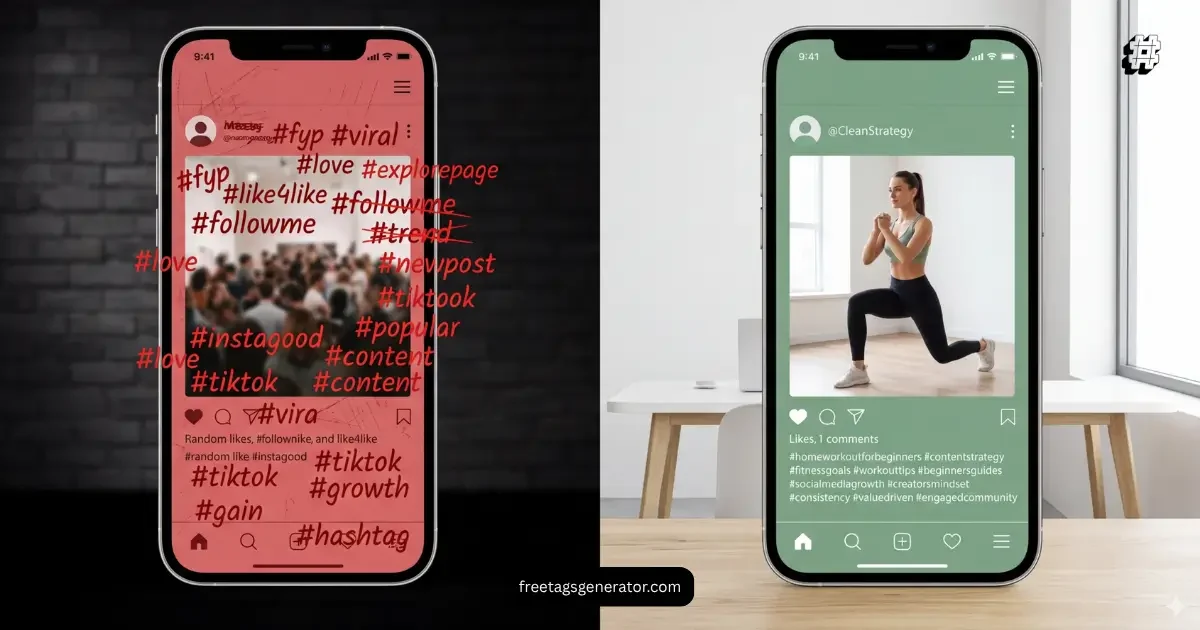
Most creators treat hashtags like a box to tick. Add 10, 20, maybe 30, and move on.
The problem is Instagram doesn’t reward volume. It rewards relevance. When your hashtags don’t match your content precisely, the algorithm gets confused about who to show your post to. That’s when reach dies early.
Real example:
A fitness creator posting home workouts used tags like #fitness, #gym, #workout, #motivation. Broad, generic, overused. Their Reels barely crossed 300 views.
What actually worked:
They switched to hyper-specific tags: #homeworkoutforbeginners, #noequipmenttraining, #apartmentfitness. Same content. Their next 5 posts averaged 2.3K views.
What to do instead:
Think of hashtags as audience filters, not exposure boosters. Use:
- 2–3 niche tags (very specific to your content)
- 2–3 mid-size tags (moderate competition)
- 1–2 broader tags (for reach testing)
Mistake 2: You’re Copy-Pasting the Same Hashtags Every Time
This one quietly kills growth over weeks.
When you reuse the same hashtag block on every post, Instagram starts treating your content as repetitive. It limits distribution because it assumes you’re not offering anything new.
Real example:
A travel page reused the same 25 hashtags on every post for 2 months. Engagement slowly dropped from 8% to under 2%. Nothing else changed.
What to do instead:
Create 3–5 hashtag sets based on content types. For example:
- Reels about tips
- Reels about storytelling
- Static posts
- Carousels
Rotate them. Slightly tweak them. Keep things fresh.
Mistake 3: You’re Using #FYP Like It’s a Magic Button (It Isn’t)
Let’s be honest.
#fyp, #viral, #trending — they feel like shortcuts. But they don’t work the way people think.
Here’s the reality: those hashtags are too broad and too saturated. Your post gets thrown into a massive pool where it disappears instantly.
Strong opinion:
#fyp is one of the most useless hashtags on Instagram right now. It doesn’t help distribution. It just makes creators feel like they’re “doing something.”
What to do instead:
Replace generic viral tags with context-based ones.
Instead of:
- #fyp
Use: - #instagramgrowthtips
- #smallcreatorjourney
- #reelsstrategy
These tell Instagram exactly who should see your content.
Mistake 4: You’re Ignoring How Hashtags Affect Engagement
A lot of creators think hashtags only impact reach. That’s only half true.
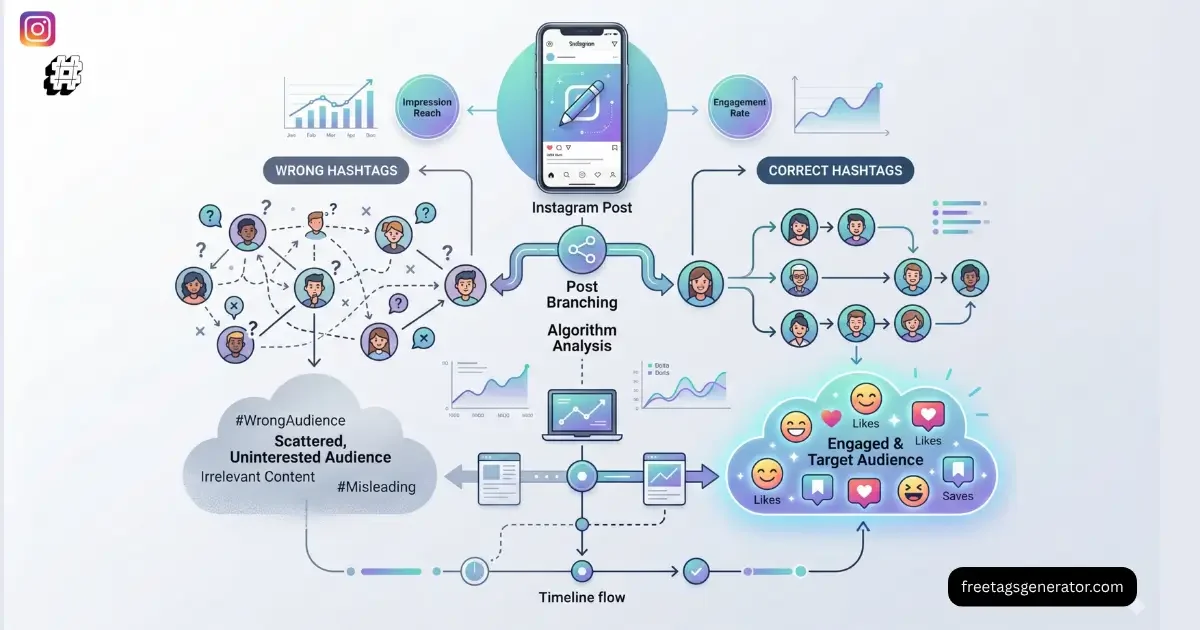
They also affect who engages with your content. If the wrong audience sees your post, they scroll past. That lowers your engagement rate, which tells Instagram your content isn’t worth pushing further.
Real example:
A business coach used #entrepreneur and #success. Their audience ended up being random viewers, not potential clients. Low saves. Low shares.
What to do instead:
Use hashtags that attract the right audience, not just more people.
Ask yourself:
“Would someone searching this hashtag actually care about my content?”
If the answer is no, remove it.
What is the biggest mistake you can make when choosing hashtags?
Picking hashtags based on popularity instead of relevance.
It’s tempting to go after big numbers, but those tags don’t help if your content gets buried in seconds. The biggest mistake isn’t using too few hashtags or too many. It’s using the wrong ones that bring the wrong audience.
Mistake 5: You’re Following Outdated Rules Like “Use 30 Hashtags”
This advice refuses to die.
Yes, Instagram allows up to 30 hashtags. That doesn’t mean you should use all 30.
I’ve tested this across multiple accounts. Posts with 5–10 highly relevant hashtags consistently outperform posts stuffed with 30 random ones.
What to do instead:
Focus on quality over quantity.
Use 5–10 hashtags that actually describe your content. That’s it.
Is using 30 hashtags bad?
Not always. But most creators dilute quality when they use that many. That’s why fewer, stronger hashtags usually perform better.
Mistake 6: You Don’t Understand Simple Hashtag Frameworks
Most people hear about hashtag rules but never apply them properly.
What is the 5 3 1 rule on Instagram?
- 5 niche
- 3 mid
- 1 broad
Balanced targeting.
What is the 3x3 hashtag method?
- 3 niche
- 3 mid
- 3 broad
Simple. Clean. Works well for consistency.
Mistake 7: You’re Not Matching Hashtags to Content Type
Reels, carousels, and posts behave differently.
Using the same hashtags across all formats limits performance.
What to do instead:
- Reels → discovery hashtags
- Carousels → value/search hashtags
- Posts → niche tags
Can I use 6 hashtags on Instagram?
Yes.
If they’re accurate, 6 strong hashtags can outperform 20 weak ones.
Mistake 8: You’re Blaming Hashtags for Low Reach
Hashtags are not the main driver.
Content quality still decides everything.
If people don’t watch, save, or share — reach drops.
What is the 80/20 rule in Instagram?
A small number of well-chosen hashtags drive most of your results. Focus on refining those instead of chasing more.
What Actually Changed (A Real Example)
A digital marketing page with 1,200 followers:
Before:
- 25–30 hashtags
- Broad tags
- 400–600 views
After changes:
- 9 targeted hashtags
- Clear niche focus
- Removed generic tags
Results (30 days):
- 2,800–4,500 views average
- One post hit 18K
- Saves tripled

Are hashtags dead on Instagram in 2026?
No.
They help categorize content, not push it. If your content works, hashtags amplify it. If it doesn’t, they do nothing.
Conclusion
Most creators don’t have a reach problem. They have a targeting problem.
That’s what Instagram hashtag mistakes really come down to.
Right now, take one post and rebuild your hashtags using a 3×3 structure. Make every tag specific.
Stop guessing. Start being intentional.
FAQs
What is the 5 hashtag rule?
The 5 hashtag rule focuses on using only five highly relevant hashtags. It works best when you understand your niche deeply and can target precisely.
What is the 3 2 1 rule on Instagram?
It means using 3 niche, 2 mid-level, and 1 broad hashtag. It’s a minimal strategy for consistent targeting.
Is 200 followers low?
Not really. If those followers engage, it’s a strong base. Growth depends more on consistency than numbers.
What are the top 10 hashtags?
There’s no universal list. The best hashtags depend entirely on your niche and audience behavior.