
Low Competition TikTok Hashtags for 2026 Why Most Creators Will Still Be Invisible
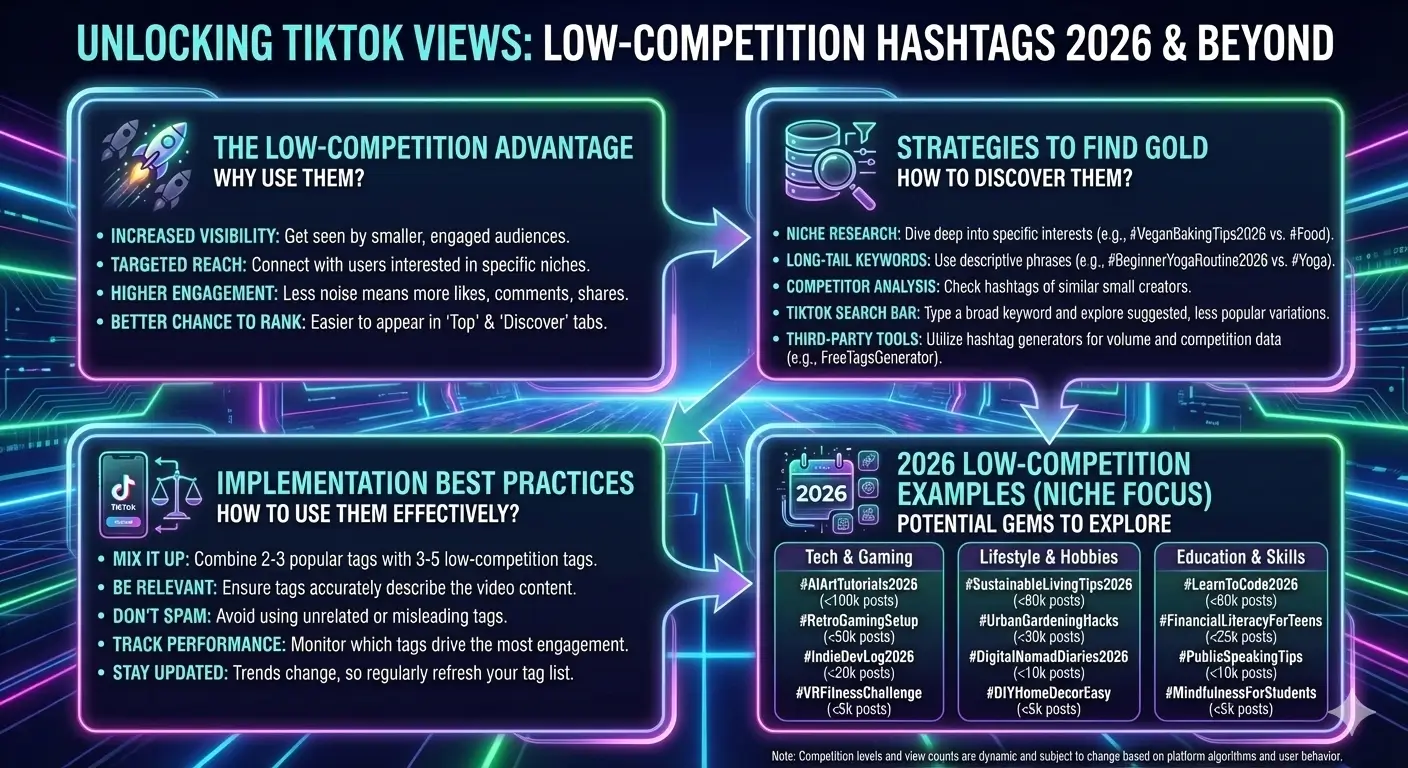
If your TikTok videos keep dying at 200 views, it’s probably not your content.
It’s your hashtags.
In 2026, TikTok is more crowded than ever. Millions of creators post every single day, all fighting for attention using the same recycled hashtags. #fyp. #viral. #trending. And then they wonder why nothing moves.
This guide exists for one reason:
To show you how Low Competition TikTok Hashtags for 2026 Growth actually work and how to use them to get real reach, not false hope.
No theory. No fluff. Just practical strategy that aligns with how the TikTok algorithm really behaves in 2026.

Why “Popular” Hashtags Are Killing Your Reach in 2026
Let’s clear this up first.
Big hashtags don’t mean big views anymore.
When you use massive tags with billions of views, your video gets dropped into a pool where:
Your content competes with viral creators instantly
TikTok has no reason to test your video further
Your post disappears in seconds
That’s why creators with good content still fail.
Low competition TikTok hashtags work differently. They give your video space to breathe.
TikTok tests content in small batches. If your video performs well inside a smaller hashtag ecosystem, the algorithm pushes it further. That’s how growth actually starts.
What Low Competition TikTok Hashtags Really Mean
Low competition does not mean low traffic.
It means:
Fewer creators targeting the same hashtag
A clear topic or intent
An active but focused audience
In 2026, the sweet spot usually looks like:
10K to 500K total views per hashtag
Clear niche relevance
Recent activity, not dead tags
Examples:
Instead of
#TikTokTips→#TikTokGrowthTips2026Instead of
#SmallBusiness→#SoloBusinessTikTok
These are long-tail TikTok hashtags. They attract fewer people, but the right people.
How the TikTok Algorithm Treats Hashtags in 2026
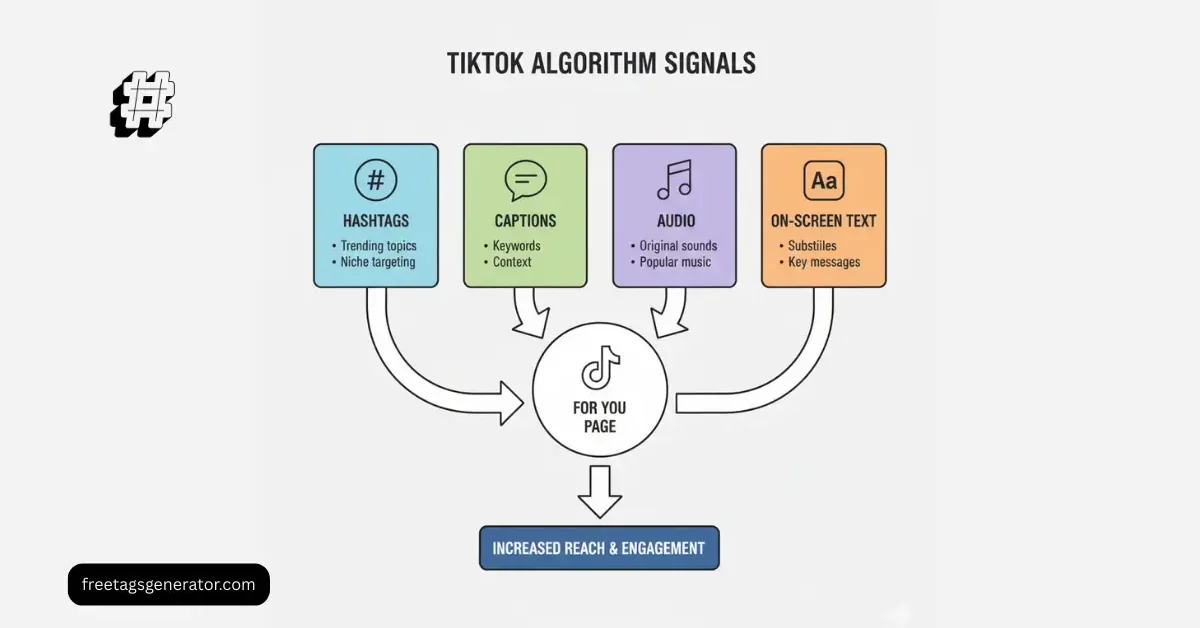
TikTok no longer reads hashtags as labels.
It reads them as context signals.
The algorithm connects:
Caption text
On-screen text
Voice audio
Hashtags
If all four match, your video gets stronger distribution.
That’s why random trending hashtags hurt you. They confuse the system.
In 2026, TikTok favors:
Topic clarity
Search-friendly hashtags
Niche consistency
This is also why creators using a TikTok hashtags strategy instead of guessing see faster growth.
How to Find Low Competition TikTok Hashtags (Without Guessing)
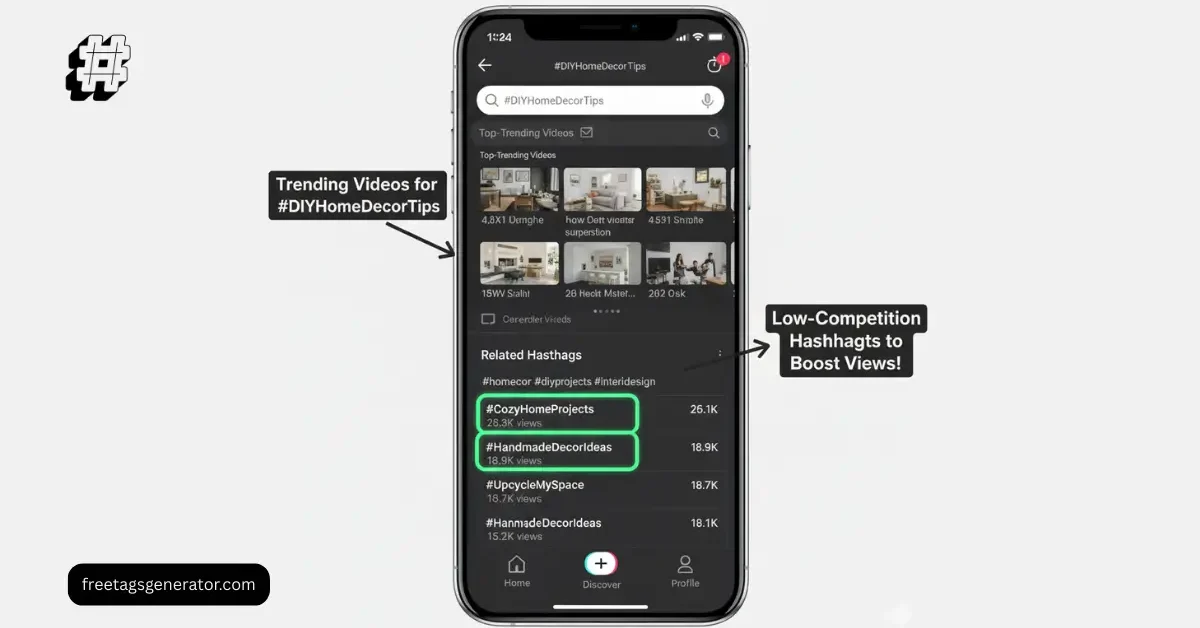
You have three options.
Option 1: Manual Research (Slow but Educational)
Search a keyword on TikTok
Click hashtags with under 500K views
Check recent videos for engagement
Look for patterns
This works, but it takes time.
Option 2: Creator Stealing (Risky)
Copy hashtags from mid-size creators
Hope they still work
This used to work. In 2026, it’s unreliable.
Option 3: Smart Tools (Fast and Consistent)
A TikTok tags generator built around low-competition data saves hours.
Instead of chasing trends, you get:
Niche-based hashtag sets
Balanced competition levels
Search-aligned tags
This is where tools quietly outperform manual effort.
If you want to shortcut the process, use a TikTok Tags Generator that focuses on growth tags, not viral bait.
The Ideal Hashtag Mix for TikTok Growth in 2026
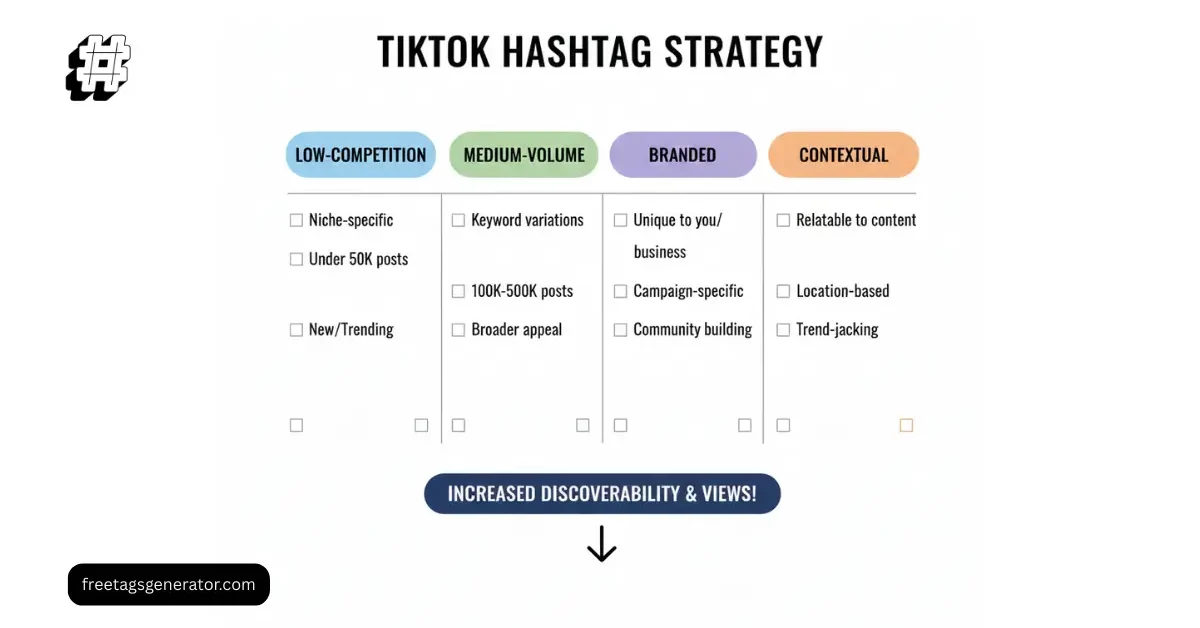
Stop using 20 random hashtags.
A smarter structure looks like this:
2–3 low competition niche hashtags
2 medium-volume discovery hashtags
1 branded or personal hashtag
1 contextual keyword hashtag
Example mix:
#FacelessTikTokTips#TikTokGrowth2026#CreatorWorkflow#ContentStrategy#YourBrandName
This balance helps TikTok test, learn, and scale your video properly.
Common Mistakes That Keep Creators Stuck
Most creators don’t fail because of content. They fail because of habits.
Avoid these in 2026:
Reusing the same hashtag set on every video
Chasing trending tags unrelated to your niche
Using only high-volume hashtags
Ignoring TikTok search behavior
TikTok is now a search engine. Hashtags should match what people type, not what sounds popular.
Case Insight: Why Small Accounts Are Winning with Low Competition Tags
Creators under 10K followers are quietly outperforming bigger pages by doing one thing differently.
They:
Target micro-topics
Use long-tail TikTok hashtags
Stay consistent in one niche
TikTok prefers predictable creators. When your hashtags tell a clear story, the algorithm learns faster.
That’s why low competition TikTok hashtags for 2026 are not a trick. They are a signal.
If your content targets American viewers, using TikTok tags for USA audience helps TikTok understand location intent and push your videos to the right users.
FAQ: Low Competition TikTok Hashtags for 2026
How many hashtags should I use on TikTok in 2026?
Between 5 and 8 well-chosen hashtags perform better than stuffing 20 random ones.
Are low competition hashtags better than trending hashtags?
For consistent growth, yes. Trending hashtags spike randomly. Low competition tags build momentum.
Do hashtags still matter on TikTok in 2026?
Yes, but only when they match your content, audio, and caption context.
Can I reuse hashtags on every video?
You can reuse core niche tags, but rotate supporting hashtags to avoid stagnation.
Should I use location-based TikTok hashtags?
If you target a specific country or audience, localized hashtags help discoverability.
Are TikTok hashtag generators safe to use?
Yes, if they focus on relevance and competition, not fake viral tags.
Final Thoughts: Stop Chasing Viral, Start Building Reach
Virality is luck.
Growth is structure.
In 2026, creators who understand low competition TikTok hashtags will quietly win while everyone else keeps copying the same tags and hoping for magic.
If you’re serious about growth, stop guessing.
Use data, relevance, and smart tools.

 Try a TikTok Tags Generator built for low competition and real reach, and give your content a fair chance to be seen.
Your videos don’t need to be louder.
They need to be smarter.