
The Worst YouTube Tag Practices That Kill Your Ranking (Stop Now)
You upload a video, feel good about the content, hit publish… and then nothing happens. A few views. Maybe a couple clicks. Then it flatlines.
I’ve been there. And more often than people admit, the issue isn’t your content. It’s the worst YouTube tags quietly working against you.
Most creators treat tags like an afterthought or copy whatever looks popular. That’s where things go wrong.
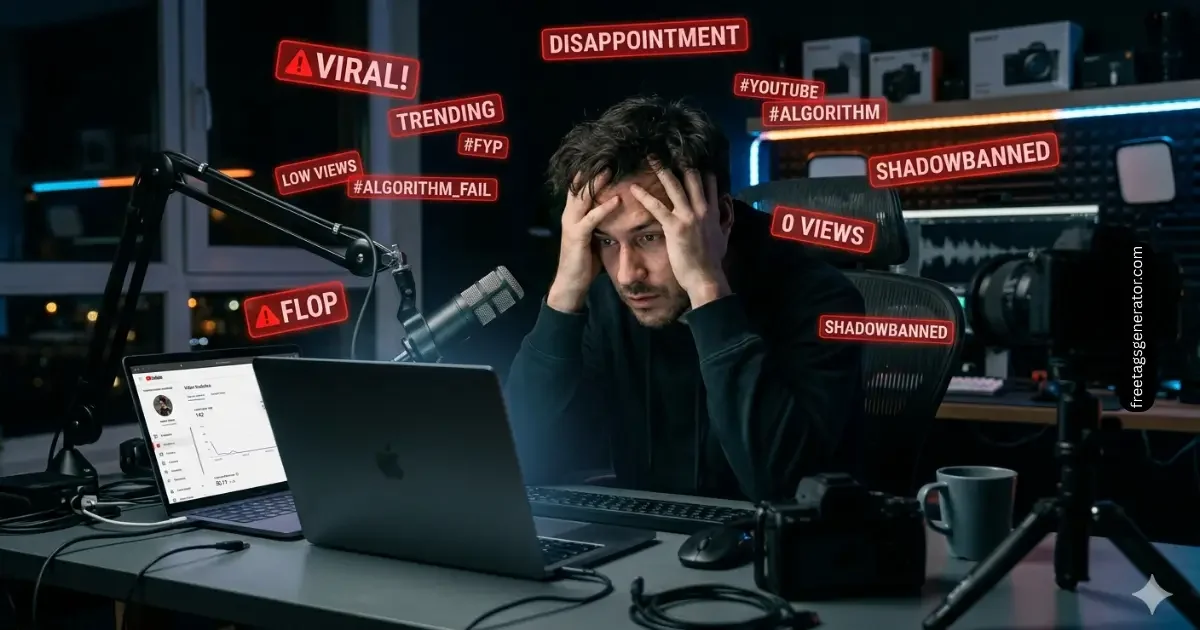
The worst YouTube tags are silently killing your videos
Tags don’t work the way most people think. They don’t magically rank your video. But they do influence how YouTube understands your content.
When you use the wrong ones, you send mixed signals. And YouTube does one thing with confusion: it stops pushing your video.
Here’s what I’ve seen again and again:
- Good videos stuck under 100 views
- High retention but no impressions
- Click-through rate doesn’t matter because nobody sees it
That usually traces back to tagging mistakes combined with weak topic targeting.
Why wrong YouTube tags confuse the algorithm
YouTube isn’t reading tags like keywords on a blog. It uses them as context clues.
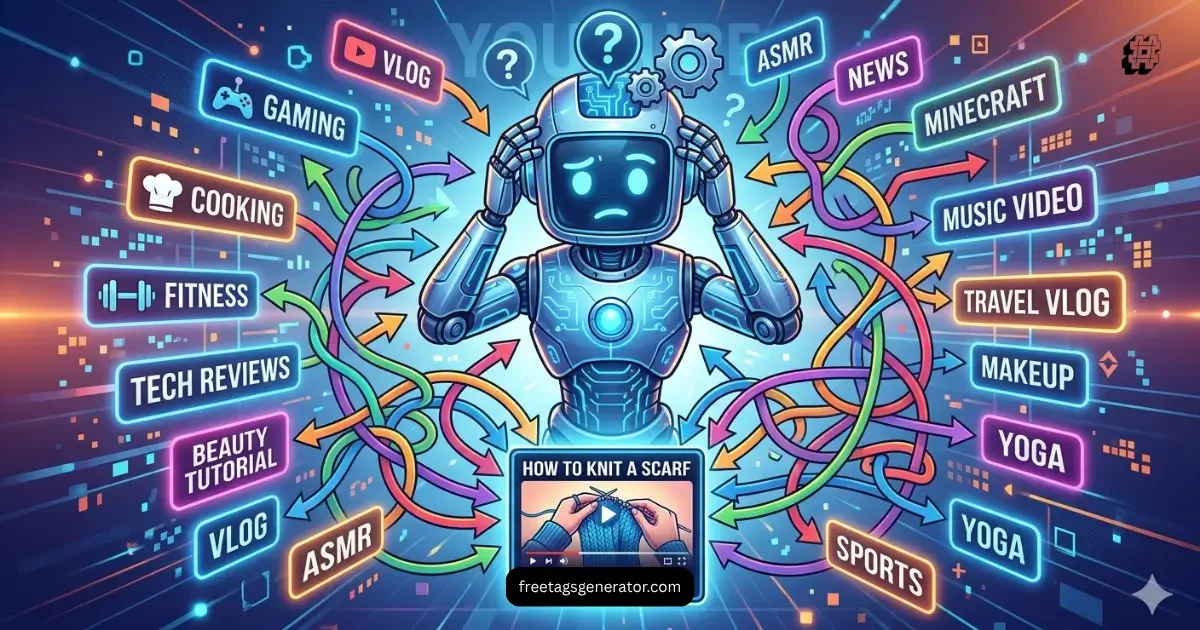
When your tags don’t match your actual content, the system struggles to categorize your video.
Example:
- Video topic: “YouTube SEO for beginners”
- Tags used: “viral videos, funny clips, trending shorts”
That mismatch creates a problem.
Now your video might get tested in the wrong audience. People don’t click. Watch time drops. The system pulls it back.
This is one of the most common video ranking issues I’ve seen with new creators.
What to do instead:
- Use tags that directly describe your topic
- Add variations of the same idea (not different niches)
- Keep relevance over volume
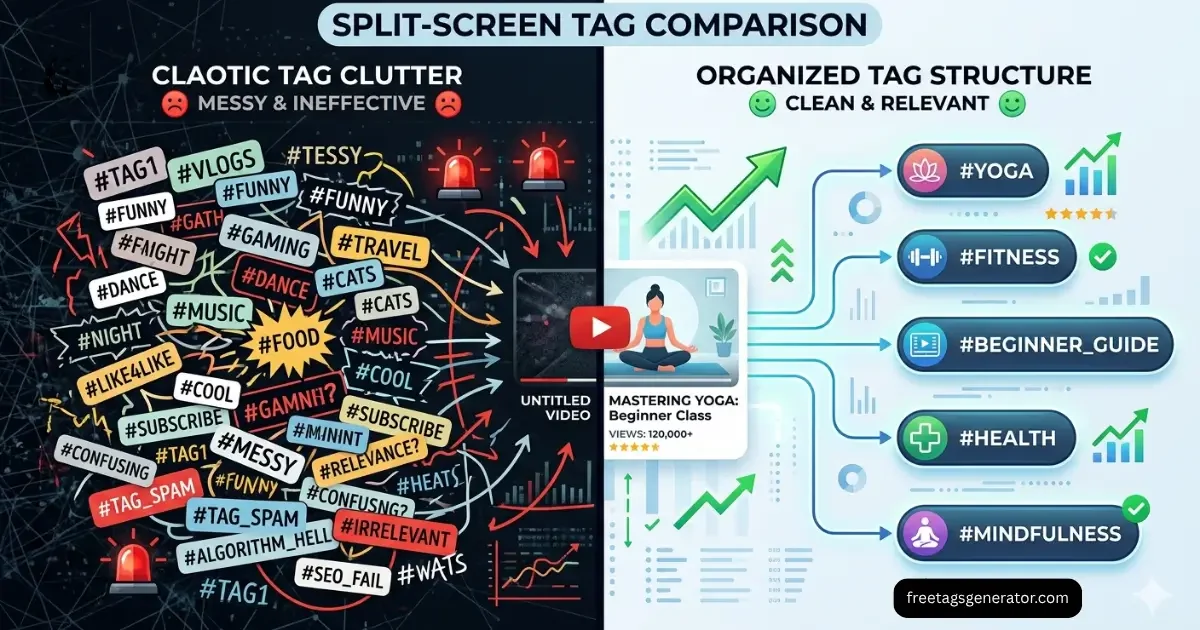
Tag stuffing is one of the biggest YouTube SEO mistakes
There’s this idea that more tags = more reach.
That’s outdated. And honestly, it’s hurting more channels than helping.
I tested this on two videos with similar topics:
- Video A: 25 random tags
- Video B: 8 highly relevant tags
Result after 14 days:
- Video B got 3.2x more impressions
- Watch time was higher because audience matched better
Tag stuffing does two things:
- Dilutes your topic
- Lowers audience accuracy
You’re basically telling YouTube, “This video is about everything.”
And when everything is the topic, nothing gets ranked.
Using irrelevant tags for views (and why it backfires)
This is where a lot of beginners fall into a trap.
They think:
“If I add trending tags, I’ll get more views.”
Short-term? Maybe a few impressions.
Long-term? It damages your channel signals.
YouTube tracks how viewers respond. If people click and leave fast, your content gets labeled as low relevance.
That’s how hurting video views starts becoming a pattern.
Example of bad tags:
- Adding “MrBeast” to unrelated content
- Using “viral shorts” on long-form videos
- Tagging trending challenges you didn’t do
What to do instead:
Stay boring. Stay accurate.
Relevance beats trend-chasing every time.
Copying competitor tags without strategy
I used to do this.
Open a big channel. Copy their tags. Paste them into my video. Done.
Zero results.
Why? Because tags don’t work in isolation. They work with:
- Title
- Thumbnail
- Watch behavior
- Channel authority
If your content doesn’t match the same level of audience expectation, copied tags won’t help.
Better approach:
- Study competitors for ideas, not exact tags
- Look at their titles and topics instead
- Build your own variation
The myth of viral tags and trending hashtags
Let me say this clearly.
There is no such thing as “viral tags.”
This is one of the biggest myths in YouTube growth.
People search for:
- “How to get viral tags”
- “Top 10 tags for YouTube videos”
But the truth is simple. Tags don’t create virality.
Content + click + retention = growth
Tags only support clarity.
That’s it.
Do tags actually matter anymore? Here’s the honest answer
Short answer: yes, but less than you think.
YouTube itself has said tags are mainly useful for:
- Misspellings
- Alternate phrasing
- Context clarification
They’re not your main ranking driver.
Your real focus should be:
- Title packaging
- Audience retention
- Click-through rate
Tags are the supporting actor. Not the lead.
A real example: how fixing tag errors improved ranking
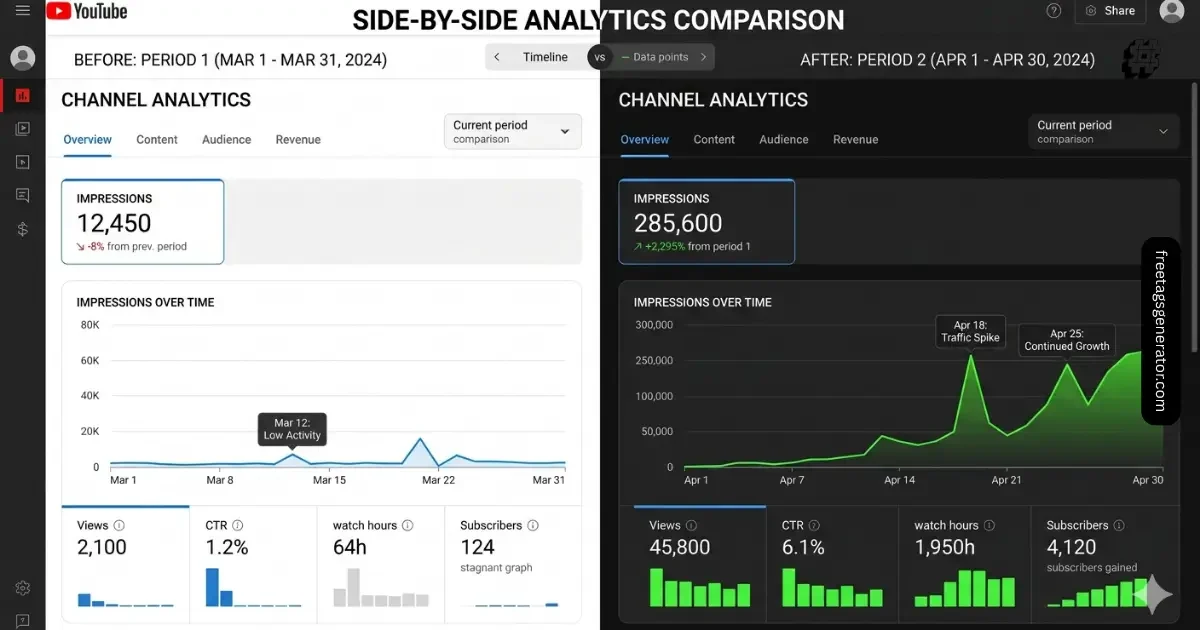
I worked on a small channel stuck under 500 views per video.
We changed one thing: tagging strategy.
Before:
- 20+ tags
- Mixed topics
- Trending keywords unrelated
After:
- 7–10 focused tags
- All aligned with title and content
- Removed noise
Results in 30 days:
- Impressions increased by 140%
- Average views per video doubled
- Suggested traffic started appearing
No change in content quality. Just clarity.
That’s how much tag errors can impact performance.
How to fix bad tags on your videos (step by step)
If your videos aren’t moving, start here.
Step 1: Remove irrelevant tags
Anything not directly related to your video topic goes.
Step 2: Add 5–10 focused tags
Think variations, not different ideas.
Example:
- youtube seo tips
- youtube seo for beginners
- how to rank youtube videos
Step 3: Match tags with title intent
If your title says “beginner,” your tags should too.
Step 4: Include misspellings if relevant
Optional, but useful in some niches.
Step 5: Keep testing
Track impressions and click-through rate.
What YouTube tag mistakes lower ranking? (Google Discover insight)
The most damaging ones I’ve seen:
- Irrelevant tags
- Tag stuffing
- Trend chasing
- Misleading keywords
These don’t just fail to help. They actively hurt discoverability.
Can wrong tags prevent your video from ranking?
Yes, but not directly.
Wrong tags don’t block your video. They misplace it.
Your video gets shown to the wrong audience.
That audience doesn’t engage.
The system reduces distribution.
That’s how wrong YouTube tags quietly stop growth.
What to use instead of bad tagging practices
If you want real results, shift your focus.
Prioritize this instead:
- Strong title with clear intent
- Thumbnail that creates curiosity
- First 30 seconds that holds attention
That’s where growth happens.
Tags just help YouTube confirm what your video is about.
Common questions creators ask
What are the top 10 tags for YouTube videos?
There isn’t a universal list. The best tags depend on your topic. Generic lists usually lead to YouTube SEO mistakes.
Do tags hurt YouTube videos?
Bad ones do. Good ones help clarify. Tags themselves aren’t harmful, but misuse causes video ranking issues.
What is the 5 hashtag rule?
Keep hashtags limited and relevant. More than 5 often looks spammy and adds no value.
Why do big YouTubers not use hashtags?
They rely more on audience signals than metadata. Their content already has strong data backing.
How to get viral tags?
You don’t. Focus on content quality and audience match instead.
What are problematic hashtags?
Anything misleading, unrelated, or spam-heavy. These confuse the system and reduce reach.
Real creator concerns you’re probably thinking about
You might be wondering:
- “Which is no. 1 trending on YouTube?”
Trends change daily. Chasing them through tags rarely works. - “How to get 1000 subscribers fast?”
Consistency + clear topic + audience retention. Tags won’t do it alone. - “Does YouTube pay $1 per 1000 views?”
No fixed rate. It depends on niche, CPM, and audience location. - “How much money is 1,000,000 views on Shorts?”
Usually lower than long-form. Shorts monetization works differently.
These questions matter. But they’re separate from tagging.
Don’t confuse growth systems with metadata tweaks.
Final thoughts on the worst YouTube tags
Most creators spend too much time worrying about tags and not enough time fixing what actually matters.
If you remember one thing, make it this:
The worst YouTube tags aren’t just useless. They create confusion. And confusion kills reach.
Clean, relevant, simple tagging works better than complex strategies.
If you want help generating better tags based on real search intent, try this:
👉 https://freetagsgenerator.com/
Use it as a starting point, not a shortcut.
FAQs
What are the problematic hashtags?
Misleading, irrelevant, or spam-heavy hashtags that don’t match your content.
Do tags hurt YouTube videos?
Yes, if they confuse the algorithm or mislead viewers.
What is a banned hashtag?
A hashtag restricted due to misuse or policy violations.
Why do big YouTubers not rely on tags?
They depend more on audience data, watch time, and engagement signals.
How to fix tag errors?
Remove irrelevant tags, focus on 5–10 accurate ones, and align them with your title.