
How Do You Find High-Ranking YouTube Tags? 7 Free Methods
You spent hours editing your video. The hook is solid. The thumbnail doesn’t look like a beginner made it. You hit publish… and it just sits there. 43 views. Maybe 100 if you’re lucky.
That’s usually not a content problem. It’s a find high-ranking YouTube tags problem.
I’ve been there. I used to treat tags like an afterthought. Just throw in random keywords, hit publish, and hope the algorithm figures it out. It doesn’t.
In this post, I’ll show you 7 free methods I’ve personally used to pull tags that actually help videos get discovered, especially on small channels.

Most YouTube Tag Advice Is Useless (Here’s Why)
Let’s get this straight first.
Tags are not magic. They won’t turn a bad video into a viral one.
But ignoring them? That’s how your video ends up buried.
The biggest mistake I see: people use generic tags like “YouTube tips”, “viral video”, “content creator”. These tags are overcrowded and give YouTube zero context about who should see your video.
Real example:
A gaming creator I worked with used tags like “gaming” and “funny moments.” His videos were getting ~200 views.
We swapped those for:
- “valorant funny fails 2025”
- “bronze rank gameplay valorant”
- “valorant clutch moments low elo”
Same content. Next video hit 2,300 views.
The difference? Specificity.
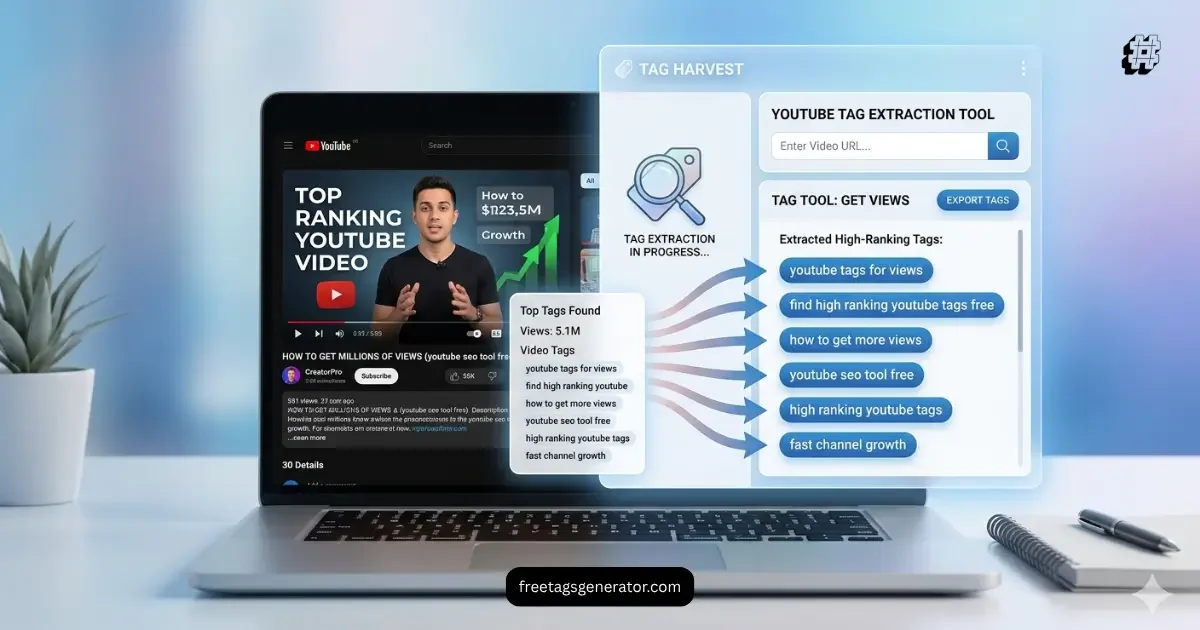
Method 1: Steal Tags from Videos Already Ranking
This is still the fastest way to find high-ranking YouTube tags.
The Problem
Most creators try to “guess” tags. That’s like throwing darts blindfolded.
YouTube has already told you what works. You’re just not looking.
Real Example
Search your topic like:
“youtube shorts growth tips”
Click the top 3 videos. These are already ranking.
What to Do Instead
Use tools like:
- TubeBuddy (free version)
- VidIQ (free tier)
Extract tags directly from those videos.
Focus on:
- Repeating tags across multiple top videos
- Tags that clearly describe the content angle
Don’t copy blindly. Combine patterns.
Method 2: Use YouTube Search Suggestions (Underrated Goldmine)
The Problem
People ignore the search bar like it’s basic. It’s not.
That autocomplete is literally user demand in real-time.
Real Example
Type:
“youtube tags…”
You’ll see:
- youtube tags for views
- youtube tags rank checker
- youtube tags for shorts
These are real searches.
What to Do Instead
Take those phrases and turn them into tags:
- “youtube tags for views 2025”
- “youtube tags for shorts growth”
- “youtube tag research tools”
This works especially well for small channel growth because you’re targeting active search intent.
Method 3: Use Free Tag Generator Tools (But Don’t Trust Them Blindly)
The Problem
Most creators rely 100% on tools like seo studio tools tag generator or rapid tag youtube.
That’s lazy. And it shows.
These tools don’t understand your video. They just expand keywords.
Real Example
You type:
“youtube SEO tips”
It gives:
- youtube seo tool free
- youtube seo tutorial
- youtube seo tips 2025
Decent, but generic.
What to Do Instead
Use tools as a starting point, not the final answer.
Good free options:
- RapidTags
- SEO Studio Tools
- VidIQ free keyword tool
Then refine:
- Remove generic tags
- Add niche-specific variations
Think like a viewer, not a robot.
Method 4: Extract Tags from YouTube Shorts (Hidden Opportunity)
The Problem
Most people ignore Shorts tags completely.
That’s a mistake.
Shorts have a different discovery pattern, but tags still help categorize your content early.
Real Example
Search:
“extract tags youtube shorts”
Pick viral Shorts in your niche.
What to Do Instead
Look for:
- Patterned tags (same format across videos)
- Hashtags used in title + description
Then adapt:
- “youtube shorts growth tips”
- “shorts algorithm 2025”
- “viral shorts strategy”
Short-form trends move faster. Update tags more often.
Method 5: Use the 3x3 Tag Strategy (This Actually Works)
The Problem
Creators either:
- Use too many random tags
- Or too few broad ones
Both kill relevance.
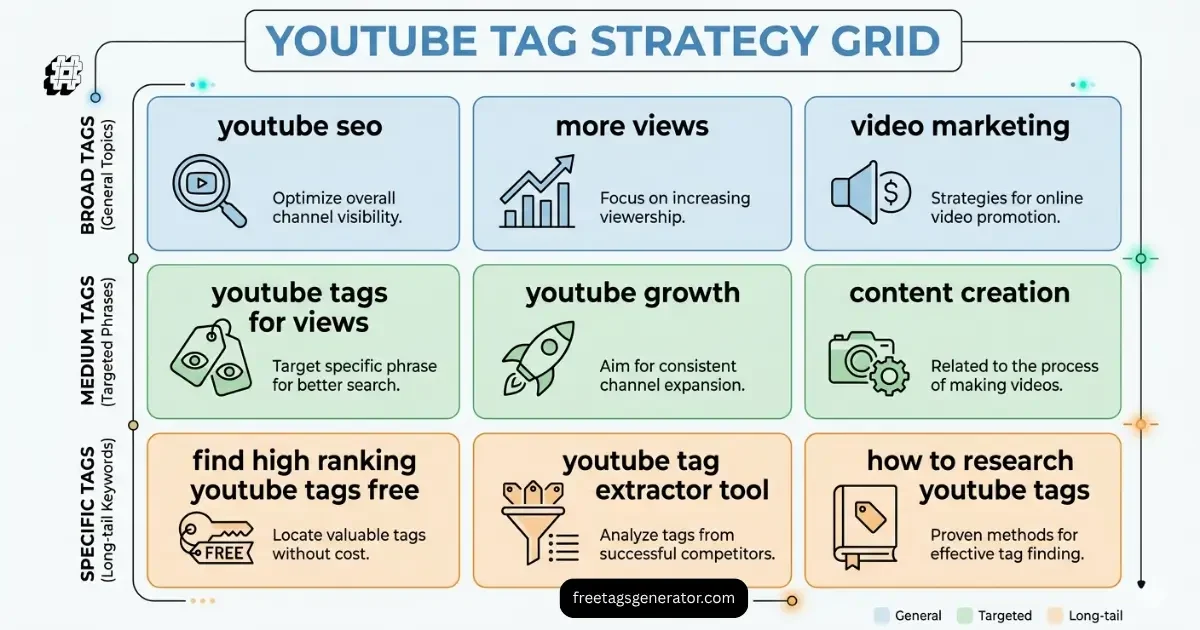
What is the 3×3 hashtag method?
It’s simple:
- 3 broad tags
- 3 medium competition tags
- 3 highly specific tags
Real Example
For a video on YouTube SEO:
Broad:
- youtube seo
- youtube growth
- video marketing
Medium:
- youtube seo tool free
- youtube tags for views
- ranking youtube videos
Specific:
- find high ranking youtube tags free
- youtube tag research strategy 2025
- small channel youtube tags strategy
What to Do Instead
Stick to 9–15 tags max.
More tags ≠ better ranking.
Relevance > quantity.
Method 6: Reverse Engineer Competitor Descriptions
The Problem
People focus only on tags section.
Big mistake.
Descriptions often contain keyword-rich phrases that double as tag ideas.
Real Example
Look at a top video description.
You’ll find phrases like:
- “how to find ranking keywords for YouTube”
- “best YouTube tags for beginners”
What to Do Instead
Turn those into tags:
- “how to find ranking keywords youtube”
- “best youtube tags beginners 2025”
This aligns your tags with actual search intent.
Method 7: Track What’s Actually Working (Nobody Does This Properly)
The Problem
Most creators never check performance.
They upload, move on, repeat.
That’s why growth is slow.
Real Example
Inside YouTube Studio → Traffic Source → YouTube Search
You’ll see:
- exact keywords people used to find your video
What to Do Instead
Take winning keywords and:
- reuse them in future tags
- double down on that topic
How to find ranking keywords for YouTube?
You don’t “find” them once. You build a loop.
Start with:
- YouTube search suggestions
- Competitor tags
- Free tools
Then refine based on:
- Your own analytics
That’s how channels scale.
What Actually Changed (A Real Example)
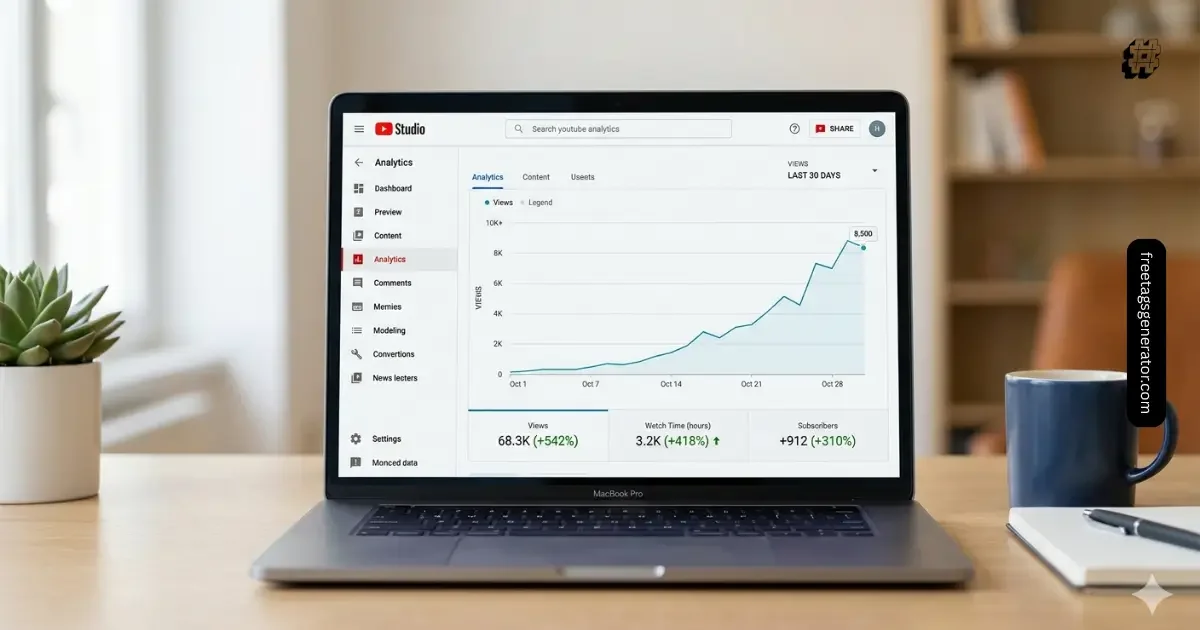
A faceless tech channel I tested:
Before:
- Random tags
- Generic keywords
- Average: 150–300 views
After:
- Used 3×3 tag structure
- Pulled tags from top-ranking competitors
- Matched tags with title intent
Results (30 days):
- Average views: 1,800–4,200
- One video hit 11K views
Same editing. Same niche.
Only change: tag strategy + keyword alignment.
Does YouTube Pay $1 Per 1000 Views? (Quick Reality Check)
No.
That number floats around a lot, but it’s misleading.
YouTube pays based on:
- niche (finance pays more, gaming less)
- audience location
- ad engagement
You might earn:
- $0.50 per 1K views
- or $5+ per 1K views
Can 500 subscribers make money?
Yes, but not directly from ads.
You can earn through:
- affiliate links
- services
- digital products
Subscribers matter less than targeted views.
What Is the 7 Second Rule on YouTube?
This one matters more than tags.
If viewers don’t stay past 5–7 seconds, your video won’t get pushed.
Tags help discovery.
Retention drives growth.
If your video dies early, tags won’t save it.
What Is the 5 Hashtag Rule and Does It Still Work?
YouTube recommends 3–5 hashtags in description.
More than that? Ignored.
What is a banned hashtag?
Some hashtags get suppressed if they’re:
- misleading
- spammy
- unrelated
Using irrelevant tags can hurt trust signals.
Conclusion
Here’s the shift most creators need to make:
Stop treating tags like decoration. They’re signals.
If you’re trying to find high-ranking YouTube tags, don’t guess. Pull from what’s already working, refine it, and track your results.
In the next 10 minutes, do this:
- Pick one of your videos
- Extract tags from top competitors
- Rebuild your tag list using the 3×3 method
Then watch what changes over the next upload.
If you want to go deeper into this, check your YouTube analytics keyword data and build content around what’s already bringing traffic. That’s where real growth starts.
FAQs
How to get 100% SEO score on YouTube?
You don’t need a perfect score. Tools like VidIQ and TubeBuddy give SEO scores based on keyword usage, but YouTube itself doesn’t use those scores directly. Focus on alignment instead. Your title, tags, and description should all reflect the same search intent. A lower score with strong viewer retention will outperform a “perfect” score with weak engagement every time.
Can ChatGPT generate hashtags?
Yes, but it should not be your only source. AI can generate relevant hashtags quickly, especially for brainstorming ideas. The problem is it doesn’t know what’s currently ranking on YouTube unless you guide it with real data. Use it to expand ideas, then validate those tags using YouTube search or competitor research.
How many YouTube views do I need to make $2000 a month?
It depends heavily on your niche and RPM (revenue per 1000 views). In lower-paying niches, you might need 400K–800K monthly views. In higher-paying niches like finance or business, you could reach that with 100K–200K views. Ads are just one income stream though. Many creators reach that income level faster using affiliate marketing or selling services.
Is 2000 views in 1 day good?
For a small channel, yes. That’s a strong signal that your video is being picked up by the algorithm. The key is consistency. If you can repeat that performance across multiple uploads, your channel will grow quickly. One spike is luck. Patterns are growth.