
Are YouTube Tags Still Important? 5 Brutal Truths You Must Know

Many creators still ask the same question: are YouTube tags important for ranking and views?
Some videos rank without them. Others use dozens and see no difference. This confusion leads many creators to either ignore tags or overuse them.
The truth is more nuanced.
Tags still play a role in YouTube SEO essentials, but not in the way many creators expect. Understanding how the algorithm actually uses YouTube video tags can help you avoid wasted effort and focus on things that truly affect growth.
Short Summary
Are YouTube tags important?
Yes, but their influence is limited compared to titles, thumbnails, watch time, and audience engagement. Tags help YouTube understand video context, especially for misspellings or niche topics. However, relying on video ranking tags alone will not significantly increase views. Creators should focus on strong titles, retention, and relevant metadata while using tags for additional clarity.
Are YouTube Tags Important for Video Ranking Today?
Many creators assume tags directly boost rankings. In reality, their role is smaller than it used to be.
Years ago, YouTube video tags were one of the main ways the algorithm understood content. Creators often stuffed dozens of video ranking tags hoping to appear in search results.
Today the system works differently.
YouTube now relies heavily on:
Title relevance
Video description
Watch time
Audience retention
Click-through rate
Viewer behavior signals
Tags still exist, but their job is mainly context clarification.
For example:
If your video is titled:
“How to fix iPhone battery drain”
Tags can help reinforce the topic:
iPhone battery drain fix
battery drain iPhone solution
iPhone battery problem
They help the algorithm confirm your content topic rather than determine ranking alone.
Bottom line:
Tags support your metadata, but they rarely determine ranking by themselves.
Brutal Truth #1 – Tags Do Not Rank Videos Alone
Many beginners believe tags and views are directly connected.
That belief often leads to this workflow:
Upload video
Add 30 tags
Wait for views
But YouTube does not work like search engines did 10 years ago.
Ranking now depends on viewer behavior signals, such as:
| Factor | Why It Matters |
|---|---|
| Click-through rate | Determines if viewers choose your video |
| Watch time | Shows if viewers stay |
| Audience retention | Measures engagement |
| Session duration | Indicates platform value |
If viewers leave quickly, tags cannot save the video.
This is why two videos with identical SEO tags relevance can perform very differently.
Brutal Truth #2 – Tags Still Help Small Channels
While large creators often ignore tags, they can still help small channels.
Why?
Because small creators lack strong data signals.
For new channels:
The algorithm has limited viewing history
Audience behavior data is small
Topic signals are weaker
In this case, relevance of YouTube tags can assist discovery.
Tags help clarify:
topic context
similar videos
search variations
Example:
If your video is about WhatsApp marketing for small business, tags might include:
WhatsApp marketing strategy
WhatsApp marketing Pakistan
WhatsApp business promotion
This helps YouTube associate your video with related searches and videos.
For beginners, tags are part of YouTube SEO essentials, even if they are not the primary ranking factor.
Brutal Truth #3 – Tags Fix Misspellings and Variations
One of the most practical uses of YouTube video tags is handling spelling variations.
Viewers often search incorrectly.
Example searches:
YouTube algorithim
how to monitize youtube
video seo youtub
Tags help connect these variations to the correct topic.
Example tag set:
YouTube algorithm
youtube algorithim
YouTube monetization
monitize youtube
This ensures your content still appears when users search incorrectly.
It is a small advantage, but it can improve search visibility.
Brutal Truth #4 – Too Many Tags Can Hurt Relevance
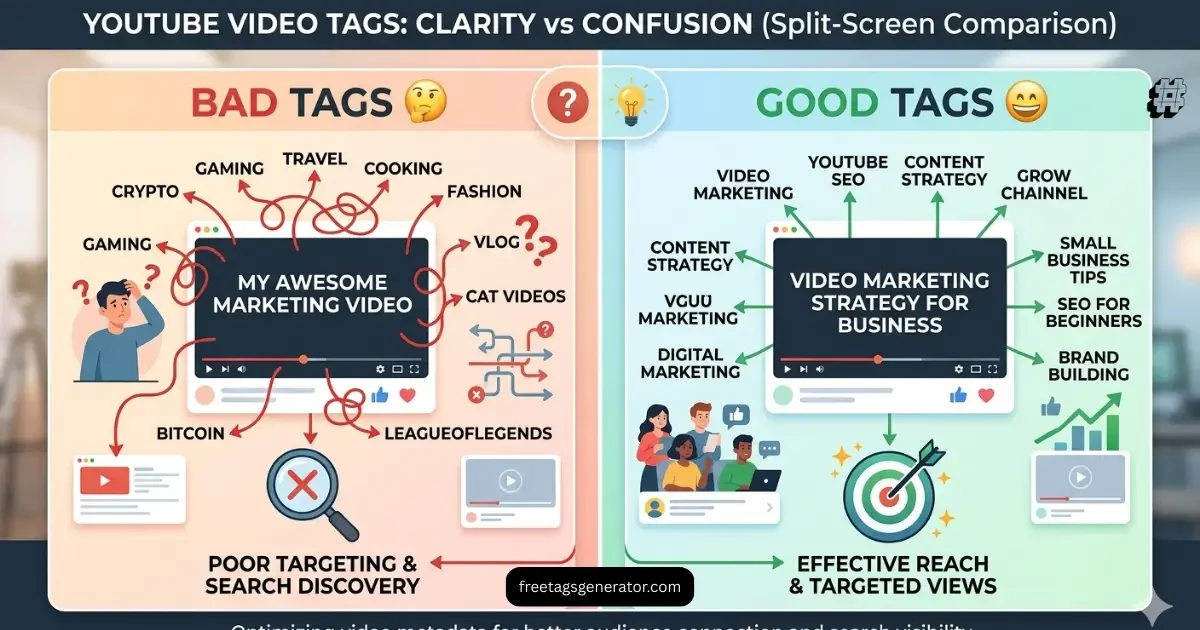
Many creators ask:
“Is it better to have more or less tags on YouTube?”
The answer: relevance matters more than quantity.
Adding unrelated tags can confuse the algorithm.
Example mistake:
Video topic: How to grow Instagram followers
Bad tag strategy:
Instagram growth
TikTok viral
YouTube monetization
crypto trading
These unrelated tags dilute topic clarity.
A better strategy:
Instagram growth strategy
grow Instagram followers
Instagram marketing tips
Instagram algorithm
Focused tags help maintain SEO tags relevance.
Brutal Truth #5 – Tags Matter Less Than Titles and Thumbnails
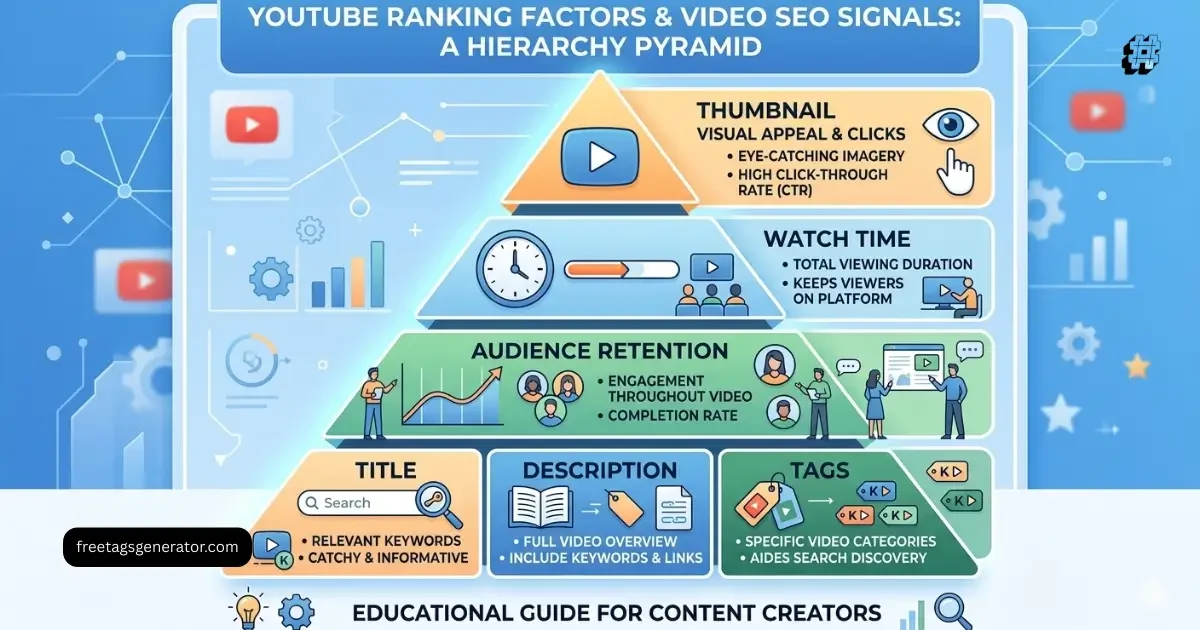
If you compare YouTube ranking factors, tags are far down the list.
The top factors usually include:
Thumbnail click-through rate
Title relevance
Watch time
Audience retention
Viewer engagement
Tags sit somewhere near the bottom.
That means creators should invest more effort into:
stronger titles
compelling thumbnails
better storytelling
Tags should support the content, not replace good content.
Step-by-Step Guide to Using YouTube Tags Correctly
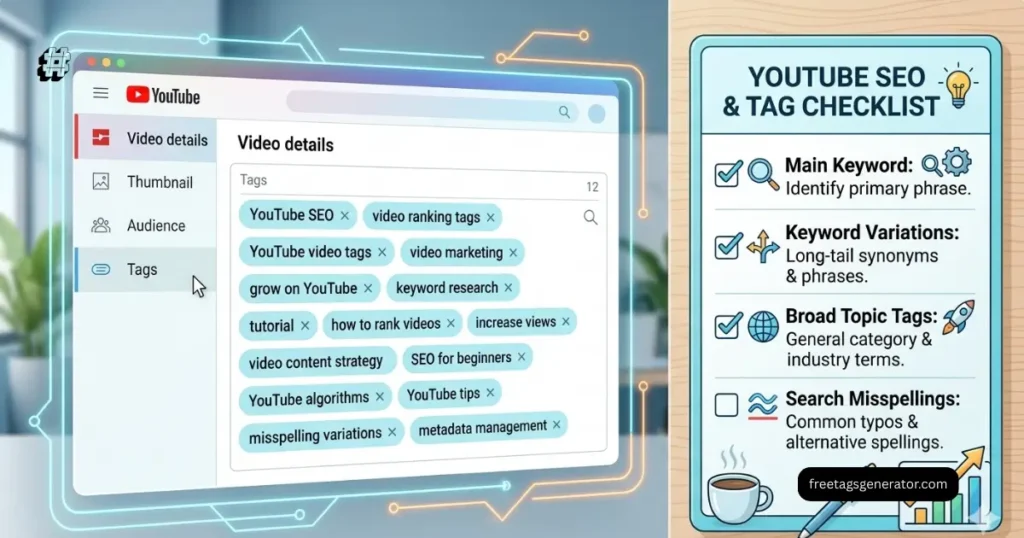
Here is a practical method many creators follow.
Step 1: Start With Your Main Keyword
Example video:
“How to start dropshipping in USA”
Primary tag:
start dropshipping USA
Step 2: Add Keyword Variations
Add search variations.
Examples:
dropshipping business USA
how to dropship USA
online store USA
Step 3: Add Broad Topic Tags
These connect your video to the larger category.
Examples:
ecommerce business
online business ideas
digital entrepreneurship
Step 4: Add Misspelling Tags
Optional but helpful.
Examples:
drop shipping USA
dropshiping USA
Step 5: Keep Total Tags Focused
A practical range:
10–15 relevant tags
Quality beats quantity.
Tags vs Algorithm – What Actually Drives Views?
Yes, but their impact is limited. Tags help YouTube understand the topic of your video and connect it to similar content, but they rarely determine ranking alone.
Understanding the tags vs algorithm debate helps creators prioritize their efforts.
Here is a simplified comparison.
| Factor | Impact Level |
|---|---|
| Thumbnail | Very High |
| Title | Very High |
| Watch Time | High |
| Audience Retention | High |
| Description | Medium |
| Tags | Low |
Tags help define context, but the algorithm mostly responds to viewer behavior.
This is why some videos with almost no tags still go viral.
Can YouTube Tags Boost Views?
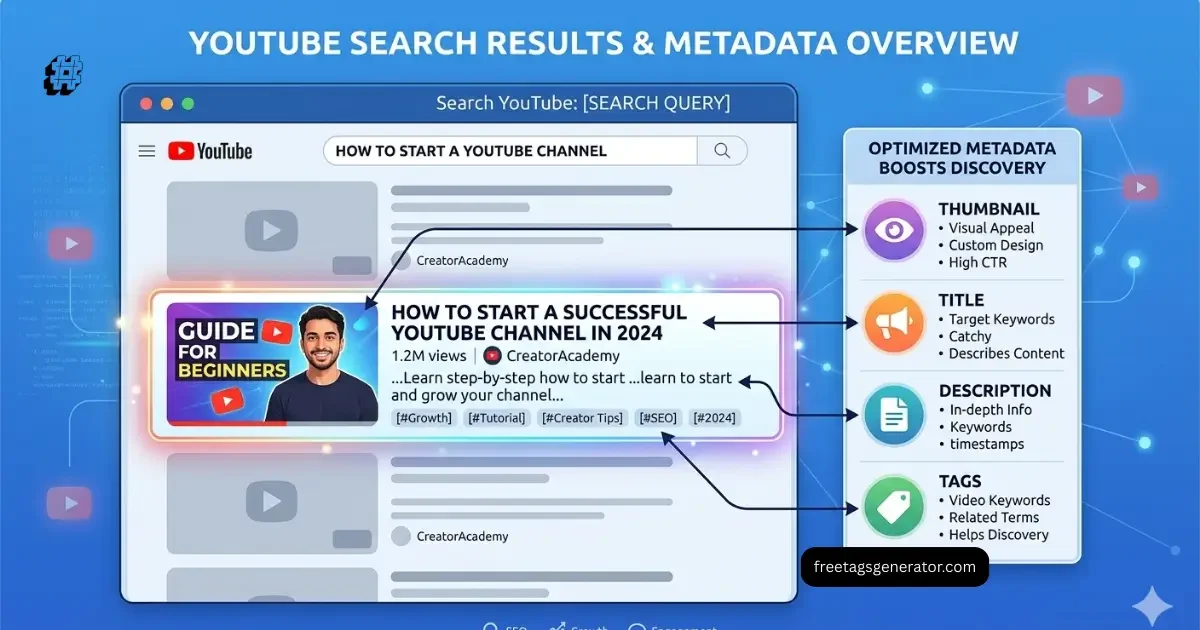
Yes, but indirectly.
Tags can help:
categorize content
match search queries
connect similar videos
However, they rarely generate views alone.
Views grow when:
viewers click your thumbnail
viewers watch longer
viewers engage with the video
Tags simply make sure your video is understood correctly.
Do YouTube Tags Still Matter in 2026?
Yes, but their role is supportive.
Tags now function as metadata signals, not ranking drivers.
Creators should treat tags as a secondary SEO tool, not the main growth strategy.
If your video already has:
strong topic clarity
clear titles
good retention
Tags simply reinforce that information.
How Important Are Tags for Video Ranking?
Tags help YouTube understand the topic relationships between videos.
They can influence:
suggested videos
search associations
similar content grouping
But they rarely push a video from page 10 to page 1.
Ranking happens when:
viewers click
viewers watch
viewers continue watching other videos
Can Missing Tags Hurt YouTube Growth?
Usually no.
Many successful channels upload videos with very few tags.
However, missing tags can reduce:
search clarity
topic confirmation
keyword variation coverage
So while tags may not be critical, ignoring them completely is not ideal.
Real Example – Tag Strategy for a Small Creator

Video topic:
“WhatsApp marketing for small businesses”
Tag set:
WhatsApp marketing
WhatsApp business marketing
WhatsApp promotion strategy
WhatsApp marketing Pakistan
WhatsApp business tips
WhatsApp marketing guide
Notice the pattern:
All tags stay within the same topic cluster.
This improves metadata clarity.
FAQs
Do tags actually matter on YouTube?
Yes, but their impact is limited. Tags help YouTube understand the topic of your video and connect it to similar content, but they rarely determine ranking alone.
What is the 30 second rule on YouTube?
The first 30 seconds of a video are critical for audience retention. If viewers leave early, the algorithm may reduce recommendations regardless of tags or SEO.
How many views do you need to make $10,000 a month on YouTube?
It varies widely depending on niche, CPM, and monetization methods. Many creators need 1–3 million monthly views, but income can also come from sponsorships and products.
Can too many tags hurt my video?
Yes. Using unrelated tags can confuse the algorithm and weaken the relevance of your video topic.
Is 2000 views in one day good?
For a small or new channel, 2,000 views in a day is a positive signal. It suggests your video is gaining traction and may receive additional recommendations.
Can 500 subscribers make money?
Yes. Creators can earn through:
affiliate links
digital products
brand collaborations
services
YouTube ads require 1,000 subscribers and 4,000 watch hours or 10 million Shorts views.
How much money is 1000 views on YouTube?
It depends on niche and audience location. Average earnings range between $1 and $5 per 1,000 views, though some niches earn more.
How much do you get paid on YouTube in Pakistan?
CPM rates in Pakistan are generally lower than Western markets. Many creators earn between $0.50 and $3 per 1,000 views, depending on audience and niche.
Final Thoughts – Are YouTube Tags Important?
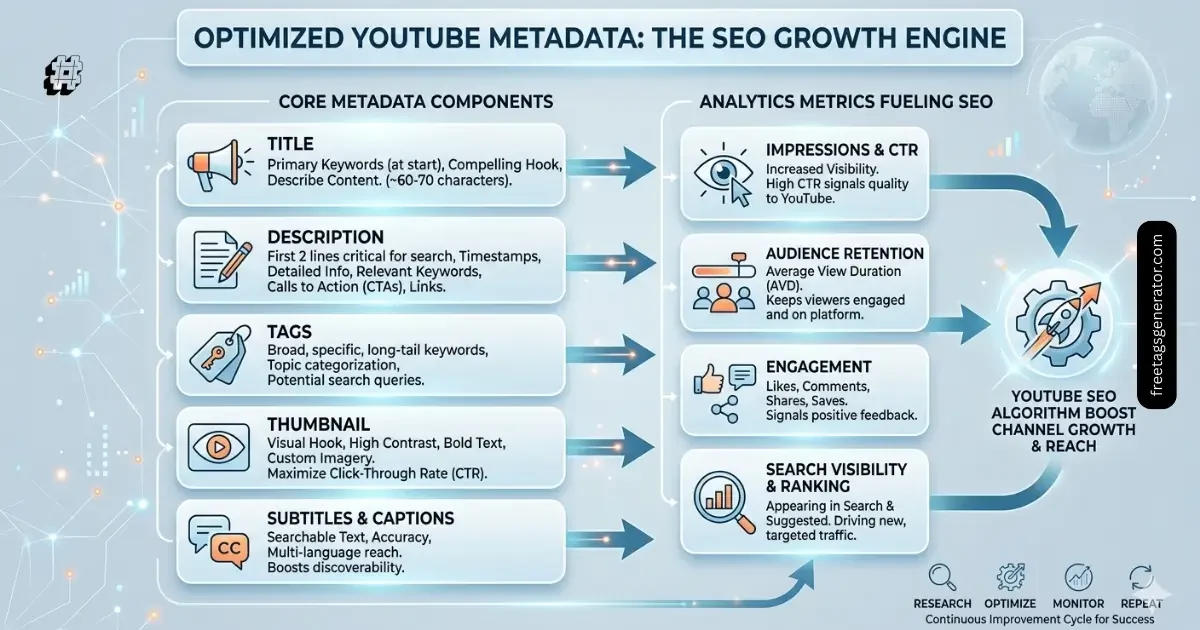
So, are YouTube tags important?
Yes, but only as a supporting SEO signal.
They help clarify topics, handle search variations, and reinforce metadata. But they do not replace the factors that actually drive growth.
Creators who succeed on YouTube focus on:
clear titles
compelling thumbnails
strong storytelling
audience retention
Tags simply help YouTube understand the video better.