
Instagram Hashtags Are Dead.
Here’s What Replaced Them and Why It Matters More Than Ever
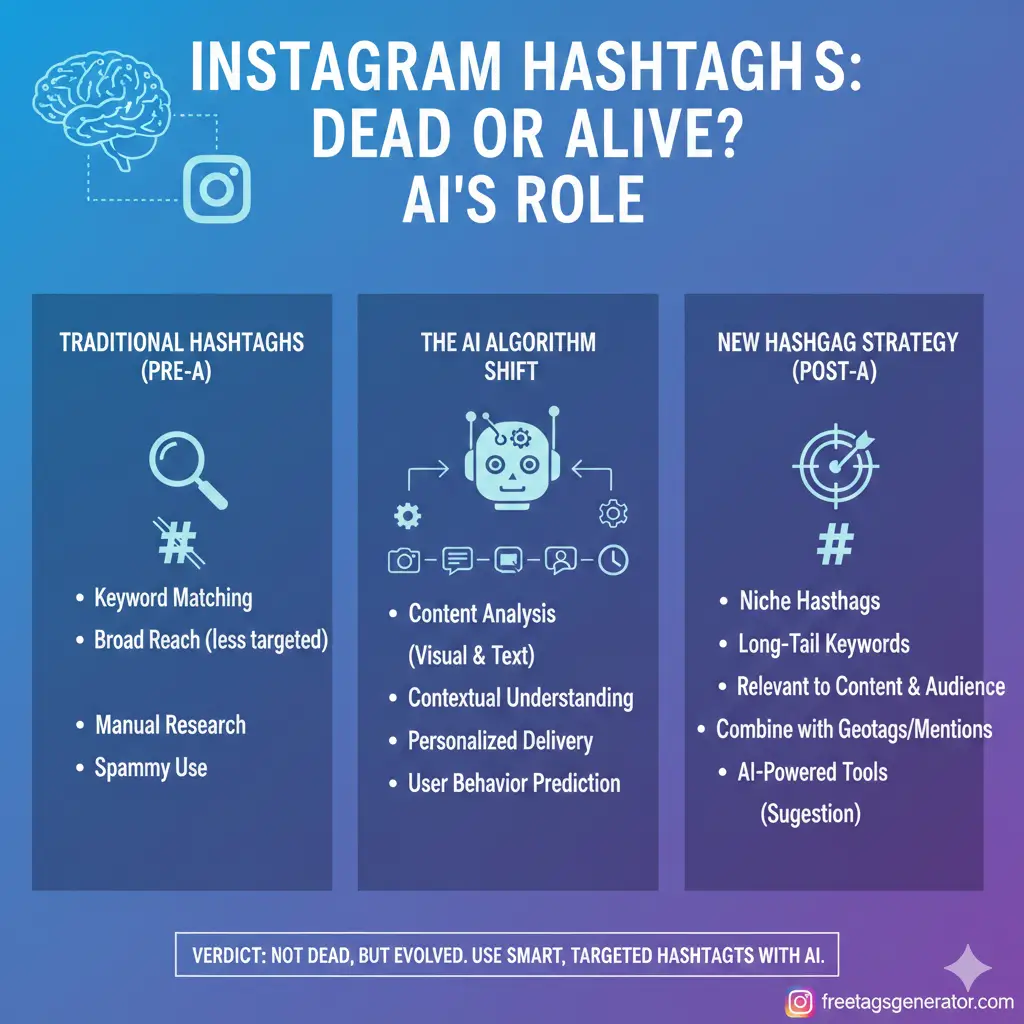
For years, hashtags were treated like the secret sauce of Instagram growth. Pick the right ones, mix high and low competition, and wait for the reach to roll in.
That era is officially over.
Instagram didn’t quietly phase hashtags out. It replaced them with something far more powerful and far more precise: AI-driven content understanding. And recently, Adam Mosseri’s reaction when asked about hashtags made one thing very clear. Instagram has moved on, even if many creators haven’t.
If you’re still spending time hunting for the “perfect” hashtag set, you’re playing a game Instagram no longer cares about.
Let’s break down what actually replaced hashtags, how Instagram’s AI now decides who sees your content, and how to use this shift to get significantly more views without gaming the system.
Why Hashtags No Longer Drive Reach
Hashtags used to serve one main purpose: helping Instagram categorize your content.
They told the algorithm what your post was about and who might be interested. That job no longer belongs to hashtags.
Instagram’s AI now understands content directly. It doesn’t need creators to label posts manually anymore. Through a combination of voice recognition, image analysis, and text scanning, Instagram can fully interpret what’s happening in your content.
That means:
What you say matters
What appears on screen matters
What objects, people, and visuals you include matter
Hashtags haven’t been removed, but they’ve been demoted. They’re no longer the primary signal.
How Instagram’s AI Actually Reads Your Content
Instagram analyzes every piece of content on three main levels:
1. Voice Recognition
Everything you say in a Reel is transcribed and understood. Keywords, phrases, and context are extracted directly from your speech.
2. Visual Recognition
The algorithm scans frames for objects, faces, environments, and patterns. A guitar, a laptop, a product box, a whiteboard. All of it sends signals.
3. Text Recognition
Captions, on-screen text, and even background text are read and categorized.
Instagram then combines all three layers to decide which audience is most likely to care.
This is exactly what hashtags used to do, just slower and far less accurately.
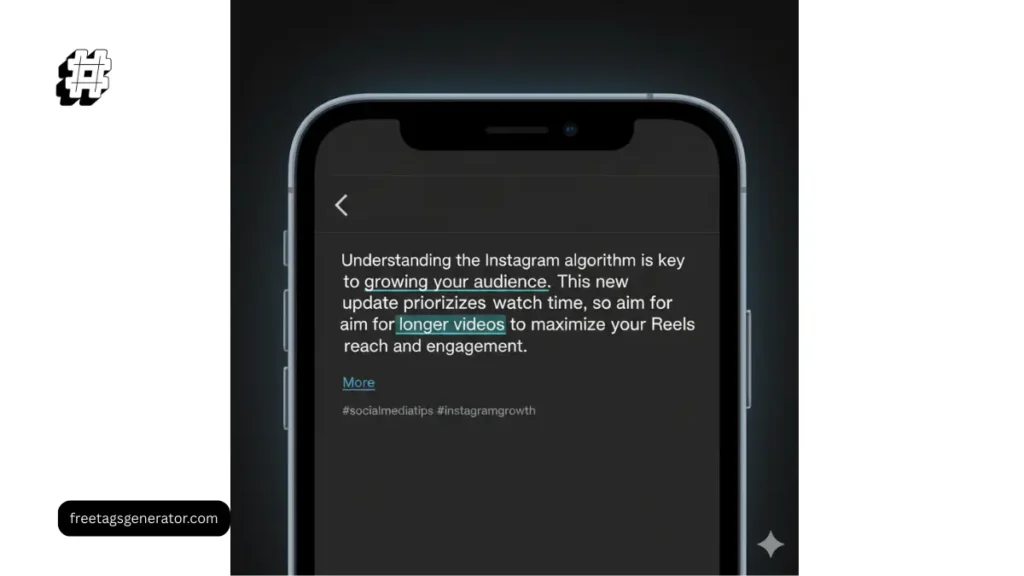
The Right Way to “Replace” Hashtags With Keywords
This does not mean keyword stuffing your script or awkwardly repeating phrases.
Context matters more than density.
Instead of forcing keywords, you want to naturally use the phrases your target audience already uses and searches for. Speak like a real person who understands the niche.
If your content is about Instagram growth for creators:
Say “Instagram content strategy”
Say “Reels reach”
Say “Instagram algorithm”
Say “audience targeting”
Not all at once. Not unnaturally. Just intentionally.
Instagram’s AI understands meaning, not just words.
How This Fits Into the Bigger Picture
This article is part of a larger breakdown we’re doing on Instagram reach and visibility in 2026.
If you’re reading this as part of The Ultimate Instagram Hashtags Guide 2026: Why Your Reach Is Dying and How to Fix It, this post covers the most misunderstood piece of the puzzle: why hashtags stopped being the driver and how Instagram’s AI quietly replaced them.
Hashtags are usually the first thing creators blame when reach drops, but they’re rarely the real cause.
Why Visual Consistency Now Matters More Than Ever
Here’s where most creators miss a huge opportunity.
Instagram doesn’t just listen. It watches.
If you talk about content strategy while holding a guitar, the algorithm receives mixed signals. It may initially test your Reel with music-focused users instead of creators.
The result?
Lower retention. Wrong audience. Slower growth.
Your visuals need to match your topic.
This includes:
Background
Props
Objects
Screens
Environment
Niche-specific visuals help Instagram categorize your content faster and more accurately.
Pattern Recognition: The Hidden Growth Lever
Instagram’s algorithm is built on pattern recognition.
It learns by associating:
Topics
Objects
People
Formats
with specific audience groups.
You can intentionally feed these patterns.
Use Recognizable People
Featuring or referencing known creators, experts, or viral figures in your niche helps Instagram connect your content to an already validated audience.
Use Familiar Objects
Product reviews explode because the AI instantly recognizes the product. AirPods, cameras, tools, software dashboards. These are powerful signals.
Use Reaction Content Strategically
Reacting to viral content in your niche works because Instagram already knows who liked the original. If you add real value, your content is shown to the same audience.
This is not copying. It’s alignment.
When Hashtags Aren’t the Real Problem
A lot of creators land here after noticing something frustrating. Views slow down. Likes drop. Reach feels unpredictable. Naturally, hashtags get blamed.
But in most cases, the issue runs deeper than tags.
If your reach dropped suddenly and nothing else changed, it’s usually a signal problem, not a hashtag problem. Instagram is no longer confused by missing tags. It’s confused by unclear content, mixed visual signals, or inconsistent topics.
That’s why in our related post, Why Your Instagram Reach Suddenly Died (And How to Fix It Without Guessing), we focus on the behavioral and algorithmic signals that actually cause reach to collapse and, more importantly, how to recover without trial-and-error posting.
This hashtags guide builds on that foundation by explaining where hashtags now fit after those bigger issues are fixed.
The Content Chain Strategy Most Creators Ignore
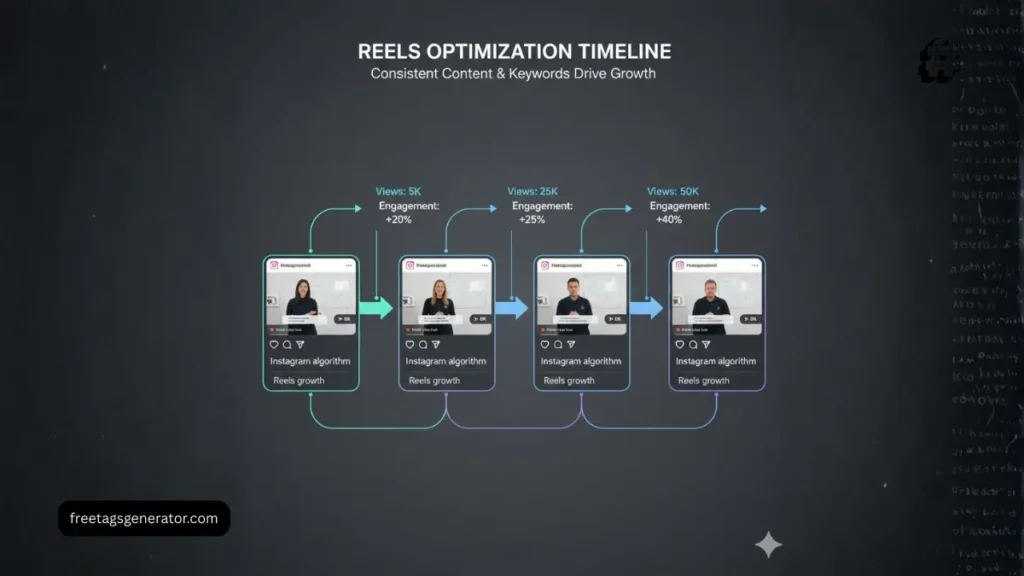
One viral post doesn’t build momentum. Sequences do.
Instagram learns from repeated interactions. If someone saves, rewatches, or engages with your content multiple times, the platform assumes they want more from you.
The mistake most creators make:
One post blows up
Next post is random
Momentum dies
Instead, create content chains.
When a Reel performs better than average:
Create follow-ups on the same topic
Use similar phrasing and visuals
Build around the same core keywords
Instagram then connects the dots and keeps recommending your content to the same audience.
Training the Algorithm Through Intentional Engagement
Not all engagement is equal.
If one video gets more saves than usual, that’s a signal. Your next video should lean into that behavior.
Instead of generic calls to action:
Ask for saves when saves matter
Explain why saving helps the viewer
Create anticipation for follow-ups
When viewers behave consistently, Instagram understands exactly who your content is for.
This is how creators stop chasing reach and start attracting it.
The Three Shifts You Need to Make Right Now
Stop relying on hashtags as your main growth tool
Optimize content for AI recognition through voice, visuals, and text
Build content sequences that train the algorithm over time
Hashtags aren’t completely useless, but they’re no longer the engine.
The engine is understanding.
Final Words
Instagram didn’t take hashtags away. It simply outgrew them.
The platform no longer needs creators to manually label content when it can already understand what’s being said, shown, and interacted with. That shift changes how growth works, but it also simplifies it. You don’t need to chase trends or memorize hashtag formulas anymore. You need clarity, consistency, and intent.
Hashtags still have a place, just not at the center of your strategy. Think of them as supporting signals, not a growth engine. When your content is clear, your visuals match your message, and your captions reflect how your audience actually thinks and searches, Instagram’s AI does the heavy lifting for you.
Creators who adapt to this reality stop guessing and start building momentum. They focus on being understood instead of being discovered by chance.
That’s the real advantage in today’s Instagram.
Frequently Asked Questions (FAQs)
Which Instagram hashtags get the most likes?
There are no universal hashtags that guarantee likes anymore. Likes come from reaching the right audience, not from using popular hashtags. Broad hashtags like #love or #instagood are overcrowded and rarely contribute to meaningful engagement. Niche-specific hashtags that closely match your content topic perform better because they support Instagram’s AI in categorizing your post correctly.
What are the top 3 Instagram hashtags?
There is no fixed list of “top” hashtags that works for every account. The most effective hashtags depend entirely on your niche, content type, and audience behavior. Three highly relevant, niche-specific hashtags are far more effective than using globally popular ones that don’t reflect what your content is actually about.
How to get 1000 likes on Instagram with hashtags?
Hashtags alone cannot get you 1000 likes. Likes come from strong content distribution driven by retention, saves, and shares. Hashtags only play a secondary role by reinforcing what Instagram’s AI already understands from your video, caption, and visuals. To reach 1000 likes consistently, focus on clear topics, strong hooks, and content sequences, then use hashtags to support visibility rather than relying on them.
What hashtags work best on Instagram now?
The hashtags that work best are:
Niche-specific
Directly related to the content
Aligned with your caption and spoken keywords
Used consistently within the same topic
Avoid generic or trending hashtags that don’t match your content. Instagram favors relevance over volume.
Is 7 hashtags too many?
No, 7 hashtags is not too many. The number of hashtags matters far less than their relevance. You can use 3, 7, or even more hashtags as long as they accurately describe your content. Using fewer relevant hashtags is better than using many random or unrelated ones.