
Your YouTube Tags Are Useless
(Here’s Why Most Creators See No Impact)

Introduction: The Quiet Lie Around YouTube Tags
For years, YouTube creators were told a simple story. Add the right tags, sprinkle in keywords, and the algorithm will reward you with views. That advice still circulates everywhere, even though it no longer reflects how YouTube actually works.
If you are frustrated because your YouTube tags are not working, you are not imagining it. Tags have lost most of their power, and relying on them is one of the biggest reasons creators stay stuck.
This article explains why YouTube tags are useless for growth today, what role they still play, and what actually moves the needle if you want reach, clicks, and long-term visibility.
This is not theory. It is based on how YouTube’s discovery system works right now.
Do YouTube Tags Work Anymore? The Honest Answer
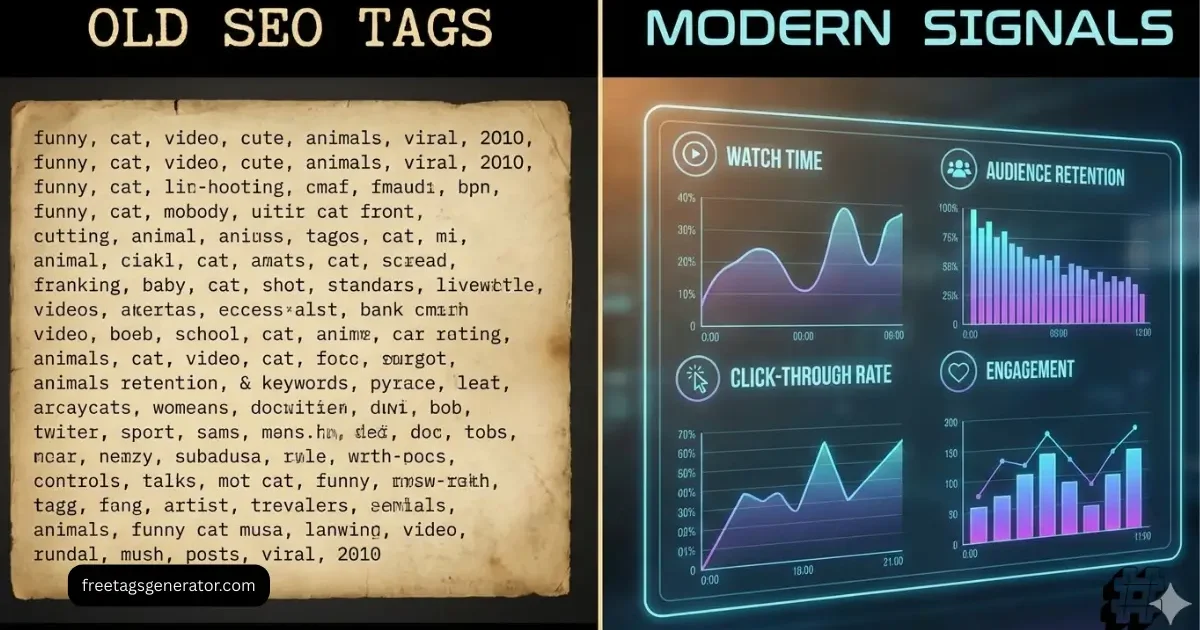
Short answer: barely.
Long answer: YouTube tags still exist, but they are no longer a ranking lever the way they were years ago.
YouTube has openly stated that tags are primarily used for:
Understanding misspellings
Clarifying ambiguous words
Providing context when audio or metadata is unclear
That is it.
Tags are not a primary ranking factor. They do not push videos into browse. They do not magically unlock suggested traffic. And they do not save weak content.
This is why many creators keep asking:
Do YouTube tags work at all?
Why are my YouTube keyword tags ignored?
Why does my video rank without tags but fail with them?
Because YouTube tags SEO is outdated advice.
optimize YouTube tags for views
“If you still want to optimize YouTube tags for views, this breakdown shows what actually matters and what can be ignored.”
Why YouTube Tags Not Working Is the Norm Now
Let’s break down why tags lost their power.
1. YouTube Understands Content Without Tags
YouTube now reads:
Spoken words from your video
On-screen text
Viewer behavior patterns
Click-through signals
Watch time and satisfaction metrics
This means YouTube understands your video better than most creators do.
Tags were useful when YouTube struggled with context. That era is over.
2. Viewer Behavior Matters More Than Metadata
YouTube does not rank videos based on what you say your video is about. It ranks videos based on what viewers do after clicking.
If people:
Click your video
Watch longer
Do not bounce
Engage naturally
YouTube promotes it.
If they do not, tags will not save you.
This is the real reason creators feel their YouTube tags are useless.
3. Wrong YouTube Tags Can Hurt Clarity
Ironically, many creators make things worse by adding:
Broad tags
Unrelated keywords
Trending but irrelevant phrases
This creates mixed signals.
Wrong YouTube tags do not help discovery. They confuse context.
YouTube Tags SEO vs Reality: What Changed
Older YouTube SEO focused on:
Keyword stuffing
Exact match tags
Long tag lists
Modern YouTube optimization focuses on:
Topic clarity
Viewer satisfaction
Session watch time
Tags moved from “ranking factor” to “supporting signal.”
That shift is why so many tutorials feel outdated and misleading.
why YouTube videos get no views
“This is one of the main reasons why YouTube videos get no views, even when creators believe their tags are correct.”
YouTube Tags for New Channels: Do They Matter More?
New creators often ask if YouTube tags for new channels still help.
The answer is nuanced.
Tags can:
Help YouTube understand your video slightly faster
Assist with misspellings or niche terms
Provide context when your channel has no history
But they do not compensate for low engagement.
A new channel with:
Strong titles
Clear thumbnails
Focused topics
Consistent watch time
Will outperform an older channel relying on tags alone.
best YouTube tags for small channels
“New creators often misunderstand tags, which is why choosing the best YouTube tags for small channels matters more than stuffing keywords.”
The Real Problem Isn’t Tags. It’s Metadata Misalignment
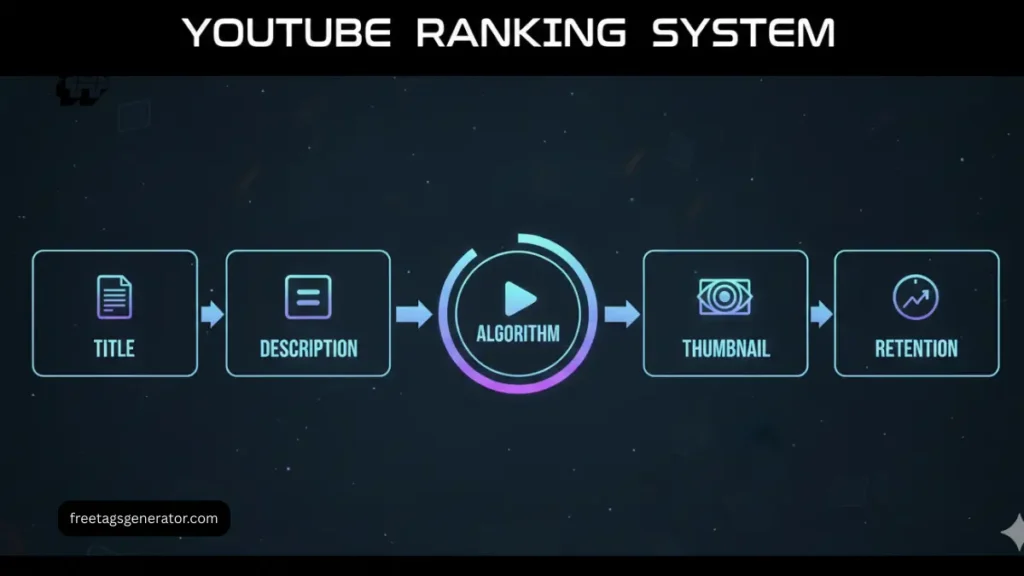
Most creators blame tags when the real issue is YouTube metadata optimization as a whole.
Metadata is not just tags.
It includes:
Title
Description
Thumbnail
Spoken content
Viewer response
If these are misaligned, tags do nothing.
What Actually Replaced YouTube Tags
If tags are weak, what replaced them?
1. Titles That Match Search Intent
YouTube prioritizes titles that:
Match what people are searching
Promise a clear outcome
Align with the video’s actual content
A vague or clever title hurts more than missing tags.
2. Descriptions That Reinforce Context
Descriptions are now far more important than tags.
A strong description:
Explains what the video covers
Uses natural language
Expands on the topic
Helps YouTube connect related videos
Tags cannot replace this.
3. Watch Time and Retention
This is the foundation.
If viewers leave early, YouTube stops testing your video. No amount of tags fixes that.
4. Click-Through Rate
Your thumbnail and title decide whether your video even gets a chance.
High CTR + decent retention beats perfect tags every time.
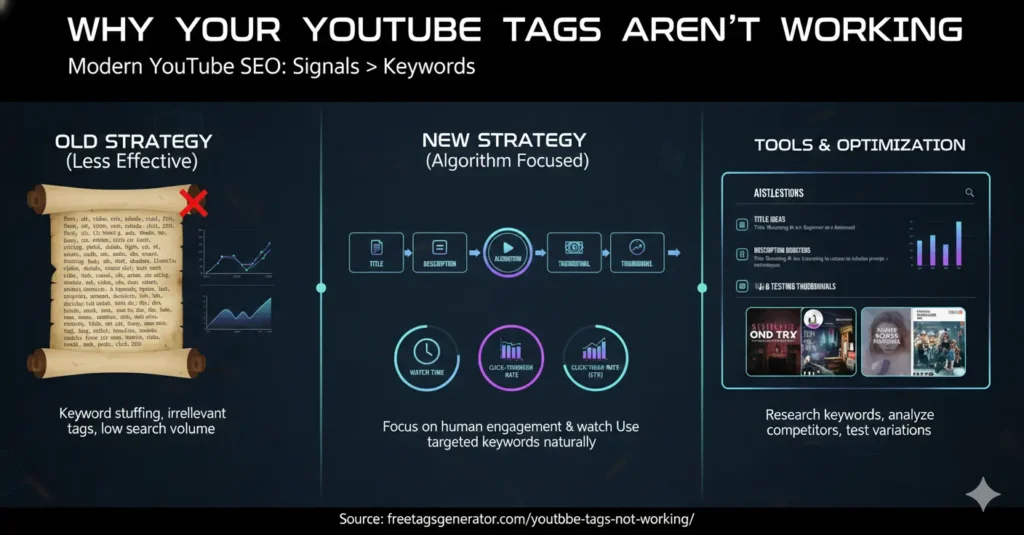
Where YouTube Keyword Tags Still Help (A Little)
Tags are not completely useless. They still help in limited situations:
Misspelled brand names
Multiple spellings of a topic
Regional language variations
Homophones and abbreviations
Think of tags as assistive metadata, not a growth strategy.
How to Use YouTube Tags the Right Way in 2026
If you are going to use tags, use them correctly.
Best Practices
Add your main topic once
Include common misspellings
Use variations naturally
Avoid stuffing
Keep them relevant
That is enough.
Anything more is wasted effort.
What You Should Focus On Instead of Tags
Here is where most creators should shift their energy.
1. Topic Selection
Choose topics people already care about.
2. Packaging
Titles and thumbnails must work together.
3. Audience Retention
Structure videos to hold attention.
4. Internal Linking
Guide viewers to related videos.
If you want a deeper breakdown of smart tag usage combined with real growth strategies, see
Ultimate YouTube Tags Guide 2026: Rank & Grow Your Channel the Smart Way
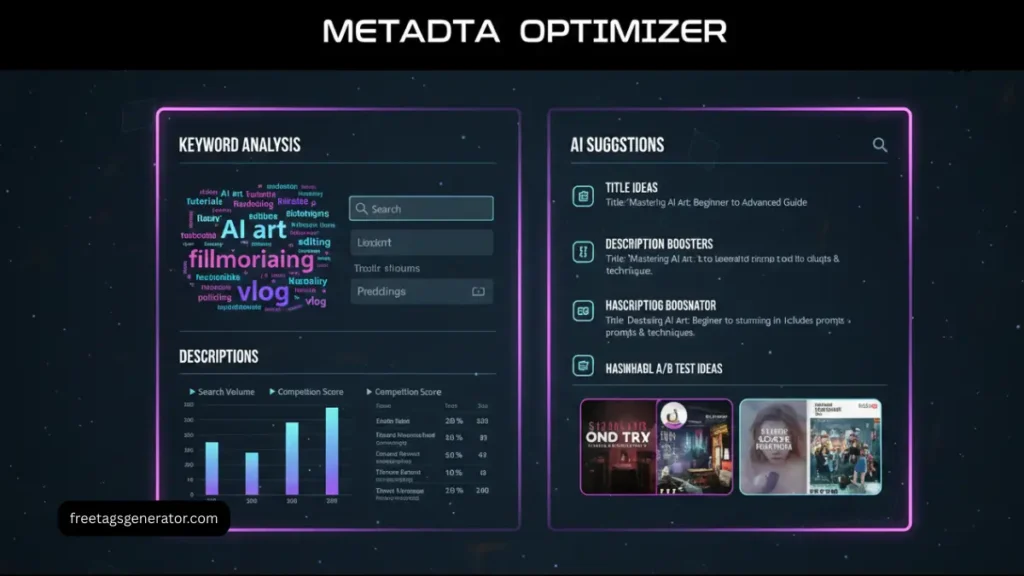
Stop Guessing, Start Optimizing
If you are still guessing keywords and tags, you are wasting time.
Use a YouTube metadata optimization tool that focuses on:
Search intent
Topic clustering
Title and description alignment
This approach outperforms manual tag stuffing every time.
Conclusion: Stop Blaming Tags, Fix the Real Issues
Your YouTube tags are not broken. They are just overvalued.
Creators who still rely on tags are playing an old game on a new platform. Growth now comes from understanding viewers, not tricking the algorithm.
Use tags lightly. Focus heavily on clarity, engagement, and content quality.
That is how channels grow now.
FAQ: YouTube Tags and SEO
Are YouTube tags useless now?
They are not useless, but they are no longer a ranking factor for growth.
Do YouTube tags help SEO at all?
They help slightly with context, not visibility.
Can wrong YouTube tags hurt my video?
Yes. Irrelevant tags can confuse topic clarity.
Should new channels still use tags?
Yes, but only as support, not strategy.
Are tags more important for YouTube Shorts?
No. Shorts rely even more on viewer behavior.
What matters more than YouTube tags?
Titles, thumbnails, retention, and engagement.